




Blog
Summer Ends. You Don’t Have To. The Science of a September Reset
Nobody mourns August out loud. We just start saying yes to earlier dinners, buy a sweater we don’t need yet, and pretend the 8 pm sunset isn’t a countdown. But your body noticed weeks ago. Daylight in Vancouver drops by roughly three and a half minutes every single day in September (astronomical day-length tables). By Halloween, the difference is measured in hours.
Here’s the part almost everyone gets backwards. Fall isn’t the season your momentum goes to die. According to the best behavioral science we have, the turn of a season is one of the strongest reset windows on the calendar, and this one hasn’t fully turned yet. This is the guide to getting ahead of it, with real numbers, and an honest section about where our mushrooms do and don’t fit.
Your brain knows what month it is
Seasonal mood shifts are not a personality flaw, they’re population-level biology. About 15% of Canadians will experience at least a mild case of seasonal affective disorder in their lifetime, and 2 to 3% will experience a serious one (Canadian Psychological Association). In a 2024 American Psychiatric Association poll, 41% of adults said their mood declines when the days get shorter (APA Healthy Minds poll). That’s not a fringe experience. That’s four people in your group chat.
Latitude matters too. Seasonal depression affects about 1.4% of people in Florida and 9.7% in New Hampshire (StatPearls, NIH). Canada sits north of both. And the timing is precise. The winter pattern typically switches on in late fall (NIMH), which means September isn’t the problem. September is the warning shot, and the month you can still get ahead of it.
The reset window is open right now
Behavioral scientists call it the fresh start effect. Temporal landmarks, the moments that feel like a new chapter, measurably move behavior. When Wharton’s Hengchen Dai, Katherine Milkman and Jason Riis tracked over five million days of real gym attendance, the single biggest jump they found came at the turn of a semester, a 47.1% rise in the odds of a workout (Dai, Milkman and Riis, Management Science). Not a new app, not a new plan. Just the calendar turning a page your nervous system has been trained on since age five.
That page is turning right now, and starting early comes with a practical edge. Begin this week and the routine is already running by the time the grey weeks arrive. You won’t be building a habit in the dark. You’ll be maintaining one that already exists, which is a much easier job.
Habits take longer than the hype says
The internet loves the 21-day habit myth. The actual study everyone half-remembers found something slower and more human. When UCL researchers tracked people building one new daily behavior, automaticity took 66 days on average, with a range of 18 to 254 days (Lally et al., European Journal of Social Psychology). A 2023 machine-learning study of over 12 million gym visits went further. There is no magic number at all. Gym habits took months, handwashing habits took weeks (Buyalskaya et al., PNAS).
So a September habit started this week is still paying out in November, right when the CPA says the hard season actually begins. The trick that makes it survive is embarrassingly simple. Plans phrased as “if X happens, then I’ll do Y” carried a medium-to-large effect on follow-through across 94 studies of more than 8,000 people (Gollwitzer and Sheeran). Not “I’ll walk more.” Instead, “when I pour my first coffee, I walk the block before I drink it.”
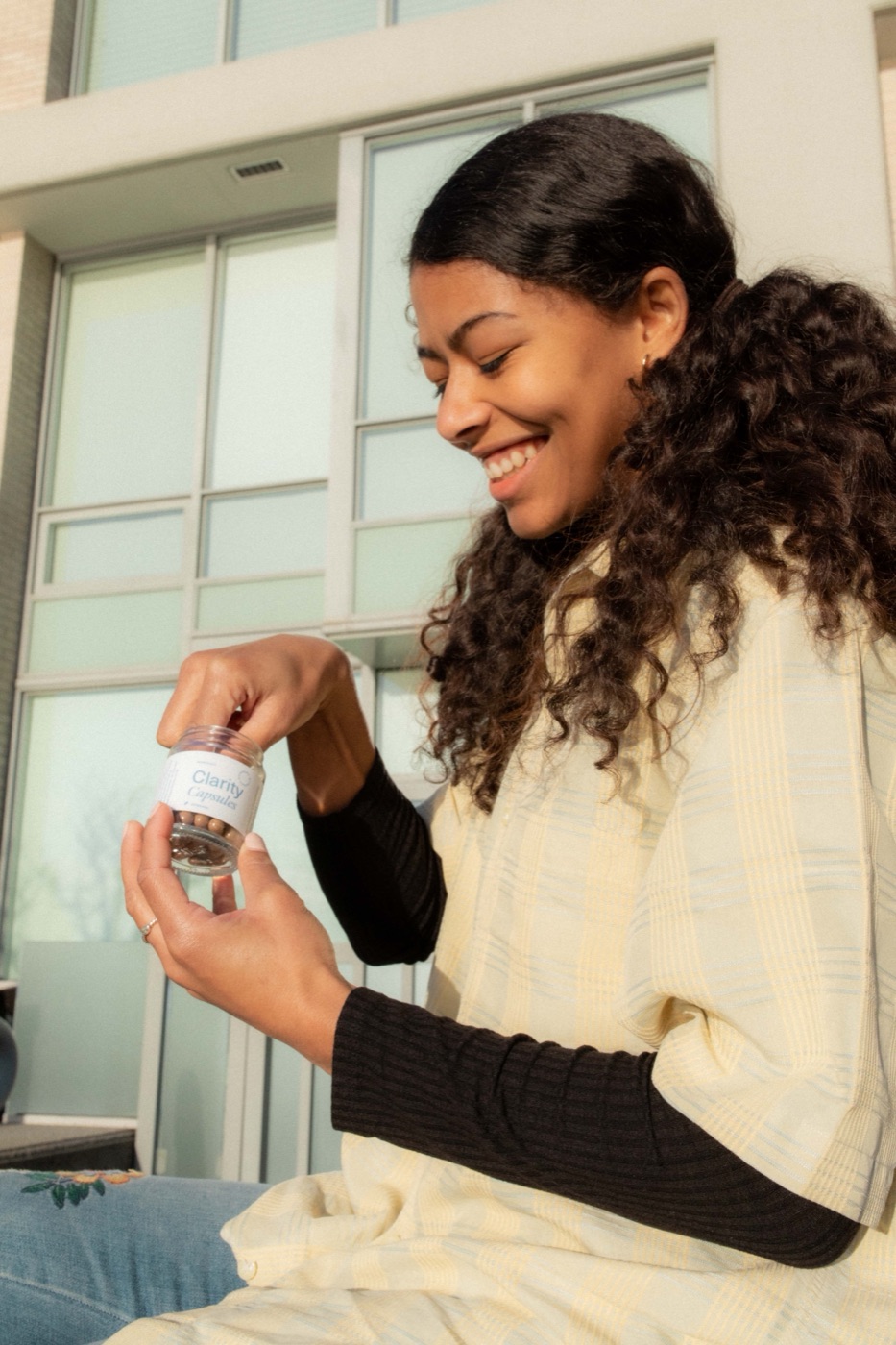
And start smaller than your ambition wants you to. One habit, not five. This is the same philosophy behind our Mini capsules at 30mg, the smallest dose we make, built for people who’d rather begin quietly and adjust than swing big and quit. If you’re not sure what small even means in mushroom terms, our dose size guide breaks the whole spectrum down.
Move before you feel like it
If exercise were a pill, every doctor would prescribe it for fall. An umbrella review of 1,039 trials covering 128,119 people found physical activity reduced symptoms of depression and anxiety with effect sizes many medications would envy, and the sharpest improvements came in psychological distress (Singh et al., British Journal of Sports Medicine). None of it required a gym membership or a personality transplant. Walking counted.
Where you walk matters more than you’d think. In a Stanford experiment, a 90-minute walk in nature reduced rumination, that looping self-critical inner monologue, and quieted activity in the brain region associated with it. The same walk through an urban setting did neither (Bratman et al., PNAS). The trail doesn’t close in September. It just gets better dressed.

Treat light like a supplement
The largest light-exposure study ever run put wrist sensors on 86,772 adults and found a clean pattern. More light during the day tracked with lower risk of depression, more light at night tracked with higher risk (Burns et al., Nature Mental Health). In a season where daylight is quietly being rationed, that’s an argument for getting outside in the first half of the day, every day, and dimming your world after dark.
Sleep wants to shift with the season too. A Berlin sleep-clinic study found people got around 30 minutes more REM sleep in winter than spring (Seidler et al., Frontiers in Neuroscience). The researchers’ own suggestion was to adjust bedtime to the season instead of fighting it. Going to bed a little earlier in October is not giving up. It’s listening.
The patio closes. The pressure drops.
Fall socializing gets smaller and, honestly, better. Life moves indoors, the crowd thins to the people you actually want in the room, and the evenings stretch out in the best way. It’s also the season the alcohol autopilot loosens. Last October, 16% of American adults who knew about Sober October took part (CivicScience), and Canadian non-alcoholic beverage sales grew 24% in a single year (NielsenIQ). The quiet season is genuinely quieter now, and nobody at the dinner table blinks.
If that’s the September experiment you’re running, we’ve written about it twice, once on the sober-curious shift and once on surviving family gatherings without the open bar. Fewer, deeper hangs are a fall feature, not a consolation prize.
Where mushrooms honestly fit
Now the part you’d expect a mushroom company to oversell. We won’t. Nobody has run a clinical trial of microdosing for seasonal mood changes, so nobody gets to claim it treats them, including us. Here is what the research actually shows. In the largest placebo-controlled microdosing study to date, 191 people ran a clever self-blinded protocol and every psychological measure improved. So did the placebo group’s, with no significant difference between them (Szigeti et al., eLife). We keep a full write-up of that study in our research library, right at the top, because you deserve the fine print with the pitch.
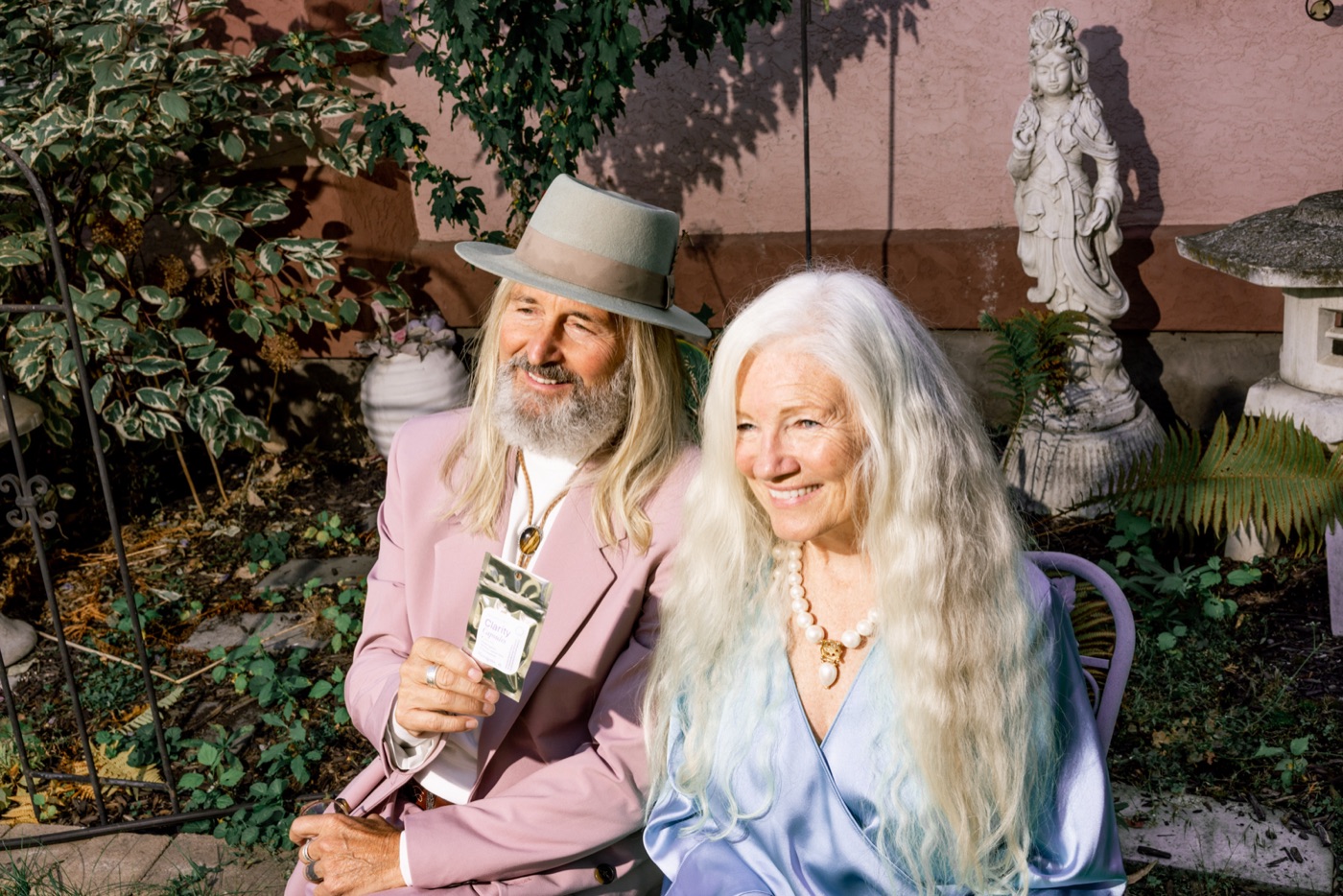
What we can tell you is how people here actually use it. As a routine anchor. A Clarity capsule a few mornings a week, subtle yet noticeable, tied to the same coffee-and-daylight ritual the rest of this article is built on. Some prefer the fully sober-of-everything version and reach for Support, our non-psilocybin nootropic blend. Either way, the mushroom is the smallest part of the system. The walk, the light and the 66 days do the heavy lifting. New to the practice entirely? Start with the microdosing guide, then browse the research library, null results included.
The usual honesty applies. This isn’t medical advice, psilocybin can interact with SSRIs and other medications, and if the fall dip in your mood is more than a dip, a professional is the right call. Established treatments for seasonal depression exist and work (NIMH covers them here).
Building a September routine? Take the two minute quiz and we’ll match a dose to it.
Frequently asked questions
Why is early September a strong time to reset?
It sits on one of the strongest temporal landmarks ever measured. In a Wharton study of 5.2 million person-days, gym attendance jumped 47.1% at the turn of a semester, the biggest fresh start effect on the calendar. Starting now also means a new habit is established before the darker weeks arrive, instead of being built during them.
How long does it take a new habit to stick?
On average 66 days, with a real range of 18 to 254 days depending on the person and the behavior. A 2023 analysis of 12 million gym visits found no universal number at all. Plan for months, not weeks, and anchor the habit to an existing cue like your morning coffee.
Does microdosing help with seasonal depression?
No trial has tested microdosing for seasonal depression, so no honest answer exists yet, and the best placebo-controlled study found improvements in the placebo group too. If your fall low is serious, talk to a professional. Proven options like light therapy are well documented by NIMH.
What’s the smallest useful fall reset?
One anchor habit. Morning daylight within an hour of waking, tied to something you already do. The light-exposure research on 86,772 adults linked daytime light to lower depression risk, and one habit done small beats five done loudly. Build from there in October.
The season is coming either way
Fall will do what it does. Shorter days, longer sleeves, a calendar that suddenly means business. The only real question is whether you set your routine on purpose or inherit whatever the season leaves you. More time indoors is more time with yourself, and that’s only a problem if you never decided what those hours are for. Start with one walk, one anchor habit, one honest look at what you want the next 66 days to build. And if you’re curious what a microdose adds to that picture, read what the research actually shows first. That’s the whole reset. September just makes it easier.