




Blog
Microdosing for Women. The Three Benefits With Real Research Behind Them.
Picture a microdoser. If your mind served up a 26 year old in a fleece vest optimizing his morning routine, the data would like a word. In one of the largest global surveys of psychedelic use ever run, nearly 7 in 10 people who only microdose were women, and their average age was 46. Not tech bros. Women in the thick of careers, kids, aging parents and group chats that never sleep, quietly taking the smallest effective dose of anything on their shelf.
We sell microdoses, so you’d expect us to tell you they fix everything. They don’t. The research is genuinely mixed, in ways worth understanding before you spend a dollar. So here are the three benefits of microdosing for women with the most evidence behind them, the actual studies, and the fine print most brands hope you won’t read.
Women are the quiet majority
The stereotype came out of Silicon Valley a decade ago. The numbers have since moved on. When researchers surveyed 6,193 psychedelic consumers across the globe and looked at the 2,488 who microdose, they found something the trend pieces missed. Among people who microdose and take larger doses, women were 44.7% of the group. Among people who exclusively microdose, women were 68.4%, with a mean age of 46 (Syed et al., Journal of Psychoactive Drugs). The smaller the dose, the more the room fills with women.
Journalists have called women the fastest growing group in microdosing. We can’t find a dataset that proves that line, so we won’t print it as a fact. What we can print is the survey above, and the wave of coverage like NPR’s reporting on thousands of mothers microdosing to take the edge off parenting stress. Something real is happening here.

Benefit one. Steadier mood.
This is the strongest card in the deck. In 2022, researchers followed 953 psilocybin microdosers and 180 non microdosing comparators for a month, the largest longitudinal microdosing study with a control group to date. The microdosers showed small to medium improvements in mood and mental health relative to the people who didn’t dose (Rootman et al., Scientific Reports).
Here’s the part that matters for this article. The authors reported that reductions in depression symptoms were stronger among women than among men. That is the only women specific outcome finding in any large microdosing cohort so far, and it landed in the direction women were hoping.
An earlier study from the same team surveyed 8,703 people and found that among those with existing mental health concerns, microdosers reported lower depression, anxiety and stress scores than non microdosers (Rootman et al. 2021). Their reasons for dosing were plain. Most said they wanted to improve their mood. Not to see sounds. To feel a little more like themselves. The even-keeled version, where the spilled coffee is just a spilled coffee and not the thing that tips the whole morning.
Benefit two. A lower idle.
Stress relief is the benefit women mention to us most, and it has decent observational backing. In a six week study that tracked 98 microdosers with daily check ins, stress scores dropped significantly over the study period (Polito and Stevenson, PLOS ONE). In the global survey, improving general wellbeing was the single most common reason to microdose at all, ahead of creativity, productivity and everything else.
This is also where the demographic story gets personal. A 46 year old woman who only microdoses is usually not chasing a psychedelic experience. She’s managing a nervous system that has been running hot since 2020. Think of the 5 to 8 pm stretch, when dinner, homework, the school forms and one last work message all land at once. Shoulders down, jaw unclenched, the to-do list back at a reasonable volume. That is what she is buying, and stress relief is the closest thing the research has to a receipt for it. The same six week study is honest about the limits, though. There was no placebo group, the improvements didn’t track with how many doses people took, and neuroticism actually ticked up slightly. We include that last part because nobody else will.
Benefit three. Fewer tabs open.
Focus is the first thing many women say they notice, usually described as fewer mental tabs open at once. One thing at a time, actually finished, instead of six things half started. The email sent, the form signed, the group chat left on read until the real work is done. The research here is thinner, so we’ll frame it carefully. The six week PLOS ONE study found a measurable drop in distractibility and mind wandering. A separate lab study found the opposite on formal attention tasks, with no cognitive improvement and a slight cost on two attention measures (Cavanna et al., Translational Psychiatry).
So the honest summary is that many users report better focus, and controlled trials haven’t confirmed it yet. If a brand tells you microdosing is a proven cognitive enhancer, they are selling past the data.
The part where we argue with ourselves
Now the fine print, because our whole thing is that you get it with the pitch.
When researchers blind people against placebo, most microdosing benefits shrink or vanish. In the famous self blinding citizen science study, 191 people ran their own placebo protocol and everyone improved, the placebo group just as much as the microdosers (Szigeti et al., eLife). A double blind lab study found no effect on emotional processing or anxiety and depression symptoms versus placebo (Marschall et al., Journal of Psychopharmacology). Two newer double blind trials found that early signals in mood and flexibility didn’t survive statistical correction (Prochazkova et al., Neuropharmacology).
Is the whole thing placebo, then? The most recent expert review of all 19 placebo controlled studies refused to land on either side, concluding that it isn’t yet possible to determine whether microdosing is a placebo, and that current data shows no strong evidence for a pure placebo interpretation either (Polito and Liknaitzky, 2024). One detail we appreciate from the placebo lab work is that EEG readings shifted on dosing days, so a microdose is measurably active in the brain even when questionnaires can’t separate it from expectation. Which matches what we tell customers anyway. A proper microdose is subtle yet noticeable. If a brand promises you fireworks, run.
Hormones, honestly
You may have seen headlines about microdosing for PMS, perimenopause or menopause. Here is the truthful status of that science. Estrogen appears to increase the density of the exact serotonin receptor psilocybin acts on, which makes the hormonal connection biologically plausible, but that finding comes from preclinical work, not trials in women (Cohen and Blest-Hopley, 2025). There is a published case series of exactly three women whose cycles changed after psychedelic use (Gukasyan and Narayan). A King’s College London affiliated study tracking menopausal women who microdose is underway, with no results yet.
Three women is not evidence of a benefit. It’s a reason to run bigger studies. Until those exist, we won’t sell you a hormone story. If you want the deeper dive, we wrote a full honest piece on microdosing and the menstrual cycle.
What women here actually say
Reviews aren’t trials, and we’d be lying if we said they don’t shape how we think about our own products. A few, unedited, from verified buyers of Clarity and Support.
“I find that it gives me more energy as I have been severely burnt out and it’s just what I need to relax and get my day going.” Nicole B.
“These are a perfect add to my morning vitamins, extra focus and more stable moods.” Emily
“While I’ve only had one so far, I really enjoyed my day. It flew by and I was in a great mood.” Sarah W.
If you want to try it
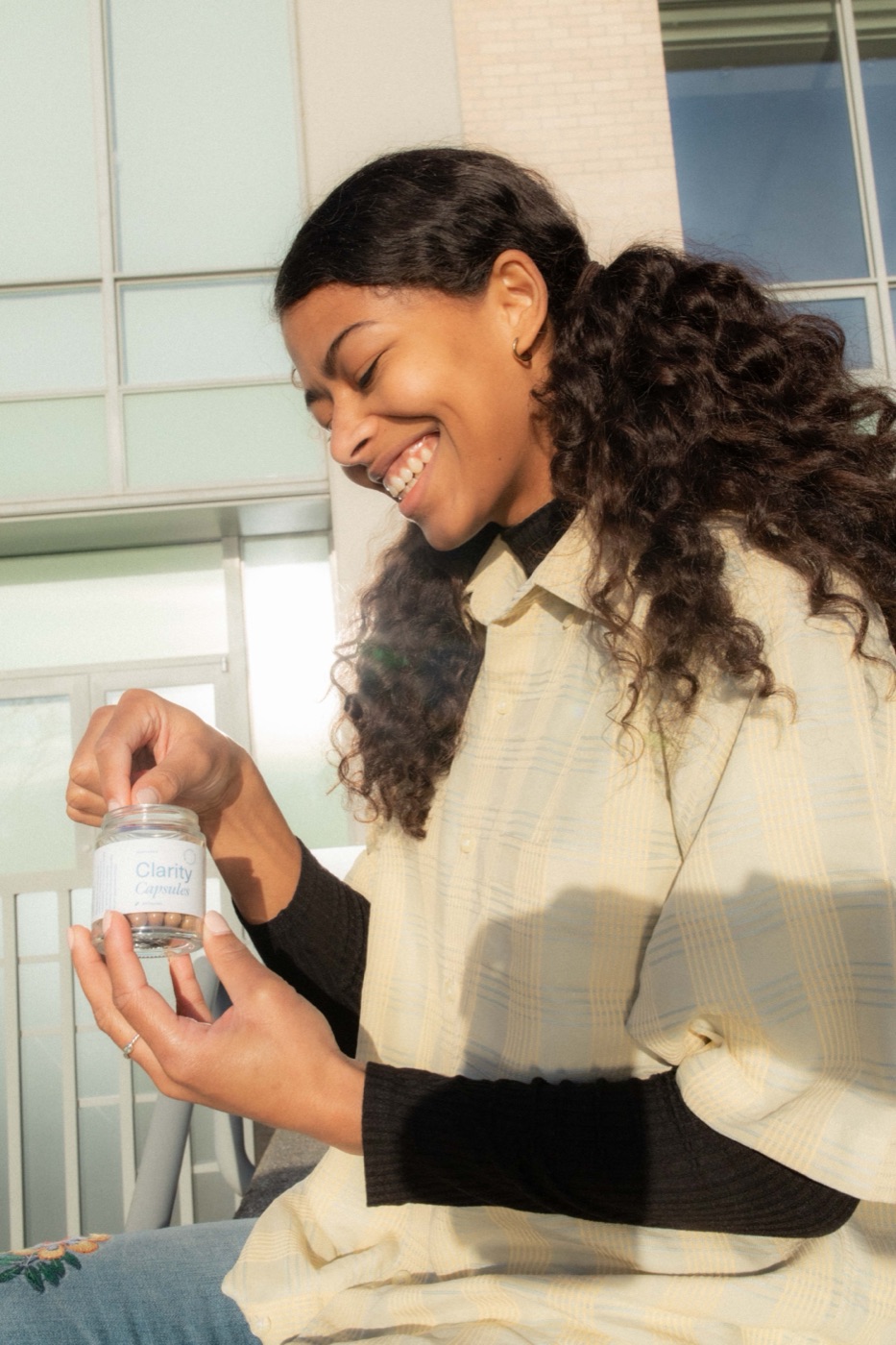
Start smaller than you think you need to. That is the entire philosophy of the practice, and it’s how the women above found their level. Our Mini capsules at 30mg and Clarity Lite at 75mg exist for exactly this. The flagship Clarity at 125mg is where most of our regulars land, a few on days a week rather than every day. New to all of it? Our microdosing guide covers protocols, and our research library holds every study we could find, null results included.
The usual honesty applies. This is not medical advice. Psilocybin can interact with SSRIs and other medications, so talk to a professional you trust before combining anything. Skip it entirely if you are pregnant or breastfeeding. And if you feel nothing after a few sessions, that is real information, adjust with intention rather than doubling on day one.
Not sure where you’d start? Take the two minute quiz and we’ll match you to a dose.
Frequently asked questions
What are the main benefits of microdosing for women?
The three with the most research behind them are steadier mood, lower stress and better subjective focus. The mood finding is the strongest, including one large study where depression improvements were greater in women than men. Placebo controlled trials have not confirmed these effects, so the science remains genuinely unsettled.
Does microdosing help with menopause or PMS?
Nobody knows yet. The biological mechanism is plausible, the published human evidence is a three woman case series, and the first dedicated menopause study is still running. Be suspicious of any brand claiming otherwise.
Will I actually feel a microdose?
You should, slightly. A well made microdose is subtle yet noticeable, a soft lift in mood or ease rather than anything psychedelic. If you feel nothing at all after a few sessions, adjust your dose gradually until you find your level.
Is microdosing safe?
Short term studies report few serious side effects at true microdose levels, but long term safety data doesn’t exist yet, and one six week study saw a small rise in neuroticism. Avoid it if you’re pregnant or breastfeeding, and check interactions if you take psychiatric medication.
Keep reading. What microdosing actually costs in Canada, and how to pick a brand that isn’t lying to you.