




Blog
Fifty and Suddenly Curious Again
The generation that sat through the last great mushroom panic is now the one quietly ordering them. Not to check out of anything. To show up more.
Ask people over fifty why they started microdosing and the answers are rarely about the compound. They are about the phone call they finally made, the pottery class they finally booked, the Saturday they said yes to. The mushrooms are the footnote. The life is the story.
We covered the science of aging well earlier this year. This is the post about the life, with the research where it belongs, underneath it, holding it up and occasionally arguing with it.
Why are people over fifty microdosing now?
In the United States, past year hallucinogen use among adults aged 35 to 50 reached 4 percent in 2022 and held there in 2023, up from under 1 percent a decade earlier, according to the Monitoring the Future panel funded by the National Institute on Drug Abuse. The survey cannot yet say what people over 55 are doing, because its oldest cohort only reached that age in 2023. It had to add an age band.
In Oregon, where psilocybin sessions are licensed, the average participant in the state’s big 2026 outcome study was 49 and a half years old. The people arriving now are not the ones the stereotype was built for. They have careers behind them and a pharmacist they see more often than their friends. They are also, by every survey that bothers to ask, the age group most starved for connection.
The US Surgeon General’s 2023 advisory put it bluntly. Lacking social connection raises the risk of premature death by about as much as smoking up to 15 cigarettes a day. Roughly a quarter of adults over 65 are socially isolated, and in one widely cited study 43 percent of adults over 60 said they felt lonely. That is the backdrop. A generation with more free time than it has had since its twenties, and fewer people to spend it with.
A microdose does not fix that. What it seems to do, going by what people over fifty report, is loosen the hinge. The email gets answered. The invitation gets accepted. The thing they used to be good at gets picked back up, badly at first, then not badly at all.
What does the research say about mood and openness?
The largest study to follow microdosers over time tracked 953 people taking psilocybin microdoses against 180 who were not, for about a month, and found small to medium improvements in mood, depression, anxiety and stress in the microdosing group (Rootman and colleagues, Scientific Reports, 2022). It is the largest study of its kind, and it is also observational, which means the people who chose to microdose may differ from the people who did not in ways the study cannot see. Hold both of those thoughts.
The finding that matters most for this age group is a small one buried in the paper. Among participants aged 55 and over, the ones combining psilocybin with Lion’s Mane and niacin improved on a finger tapping test of psychomotor speed, while psilocybin on its own did not, and the effect did not show up in younger participants at all. That subgroup was 32 people, the authors themselves warn the result may be anomalous, and one co-author holds a pending patent on exactly that combination. Nobody should build a retirement plan on a finger tapping test. But it is the first hint in the data that the oldest microdosers were not simply along for the ride.
The openness result comes from the other end of the dose scale. In a pooled analysis of 52 healthy volunteers at Johns Hopkins, average age 46, a single high dose session raised openness by 2.8 points at one to two months, and by 5.7 points in the people who had a complete mystical type experience. In that group it was still 4.2 points above baseline more than a year later (MacLean, Johnson and Griffiths, Journal of Psychopharmacology, 2011). Openness is the personality trait that covers curiosity, imagination and appetite for new experience, and it is the one that, for most adults, drifts downward from the fifties on. A single supervised session nudged it up and kept it there.
Now the counterweight, because we always include it. The largest placebo controlled microdosing study to date, a self blinding trial of 191 people run by Imperial College London and published in eLife in 2021, found that wellbeing, mindfulness and life satisfaction all improved over four weeks of microdosing. They improved by about the same amount in the placebo group. Expectation did a great deal of the work. Any honest account of microdosing has to sit with that, and so does any honest account of why the placebo group felt better too. People who expect to feel more open, and act on it, often do.
Reconnecting with family
Grandparents are not short on motivation. In AARP’s 2025 study of 3,283 grandparents, 83 percent described high joy in the role, 76 percent said texting, video calls or social media were their main way of staying in touch, and half of grandparents over 80 now text their grandchildren. The gap between wanting more family time and getting it is partly distance and schedules, which is what most grandparents blamed in the 2011 version of the same survey, and partly the small, private reluctance to be the one who reaches out.
This is where the openness research stops being abstract. A person who feels a little more curious and a little less guarded picks up the phone. They ask the grandkid about the game they do not understand and actually listen to the answer. They plan the reunion instead of dreading it, and if the reunion has an open bar, we have written about that too.
Nobody in our community describes this as a transformation. They describe it as a Tuesday where they were slightly more themselves than usual, and a daughter who noticed.
New hobbies at fifty plus
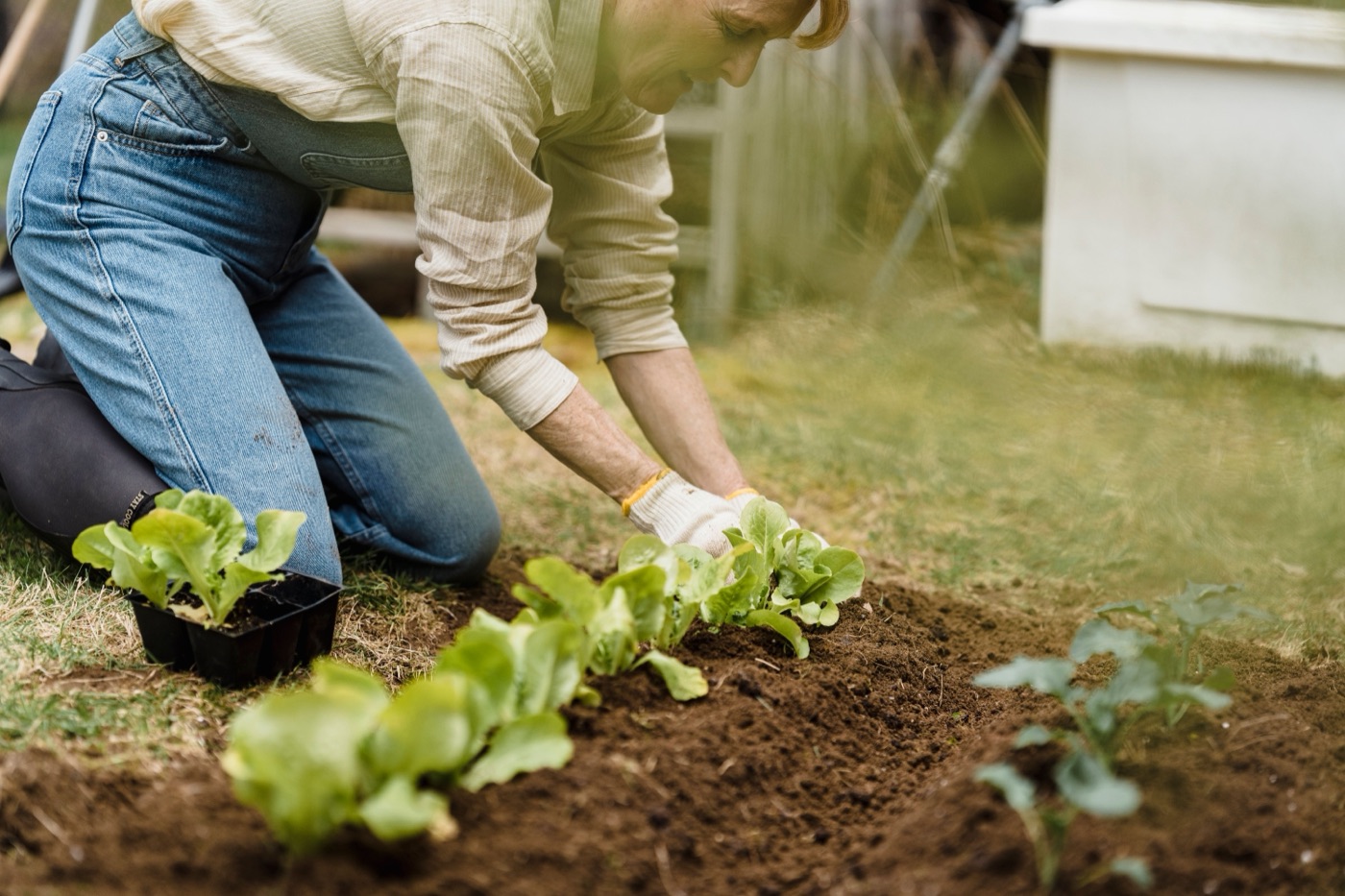
A 2023 study in Nature Medicine followed 93,263 people aged 65 and over across 16 countries and found that having a hobby went with fewer depressive symptoms, better self rated health, more happiness and higher life satisfaction (Mak and colleagues, 2023). The effects were small, the study was observational, and it could not rule out that people who already feel better are the ones who take up hobbies. The pattern held across all 16 countries, from Spain, where half of older adults reported a hobby, to Denmark, where nearly all of them did.
The sharper study is older and smaller. The Synapse Project at the University of Texas at Dallas randomised 221 adults aged 60 to 90 to fourteen weeks of digital photography, quilting, both, a social club, or easy home activities, about fifteen hours a week. The people learning photography or quilting improved their episodic memory. The social club on its own did not (Park and colleagues, Psychological Science, 2014). The activities were not chosen because they were relaxing. They were chosen because they were hard, and the difficulty was the point.
Here is the honest way to put a microdose into that picture. It is not the hobby. It has never been the hobby. What people report is that the first week of being terrible at watercolours feels less like evidence of decline and more like being a beginner again, which is a feeling most adults have not had in thirty years. What people over fifty mention most often, whether they started on Clarity or something gentler, is that they kept going past the part where they usually quit.
Social stimulation and the habit of saying yes
Across 148 studies with an average follow up of seven and a half years, people with stronger social connections had 50 percent higher odds of survival, a figure the Surgeon General’s advisory leans on heavily. The same advisory notes that older adults are the most isolated group in the country and the least likely to say they feel lonely.
The Synapse Project above is the caution here. The social club on its own did not move memory. What social contact does, reliably, is keep people alive and keep them showing up for the harder things.
Saying yes is a muscle, and like every muscle it goes quiet if you stop using it. The people over fifty who describe microdosing as socially useful almost never say it made them the life of the party. They say it made the party feel like a reasonable idea, and that once they were there, they stayed.
If you have been sober curious for a while and found that the evenings got shorter without the drinks, this is the same conversation from a different angle. Wavy at 300mg is the one built for an evening rather than a workday, and the microdosing guide covers how it fits.
Inspiration, creativity and the itch to make things
The creativity research is the messiest corner of this field, and we like it for exactly that reason. The most cited microdosing creativity study measured 38 people at a Dutch psychedelic society event before and about ninety minutes after a microdose of truffles, and found gains in both convergent and divergent thinking. There was no placebo, everyone knew what they had taken, and the authors said so (Prochazkova and colleagues, Psychopharmacology, 2018). A placebo controlled trial of 60 people at a full dose found that idea fluency dropped during the session, and that a week later participants were generating ideas rated as more novel (Mason and colleagues, Translational Psychiatry, 2021), which is roughly what every artist who has tried this would have predicted.
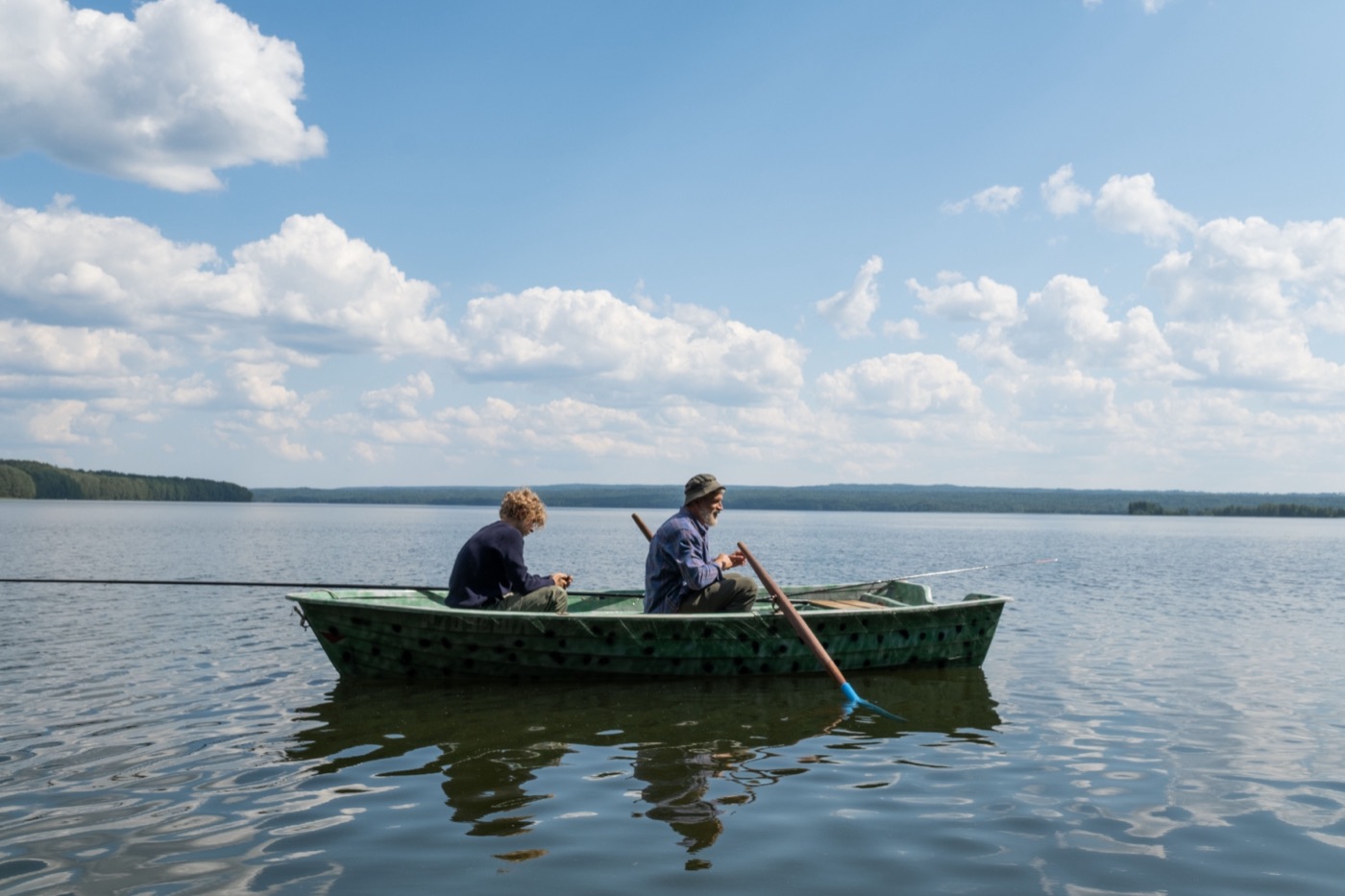
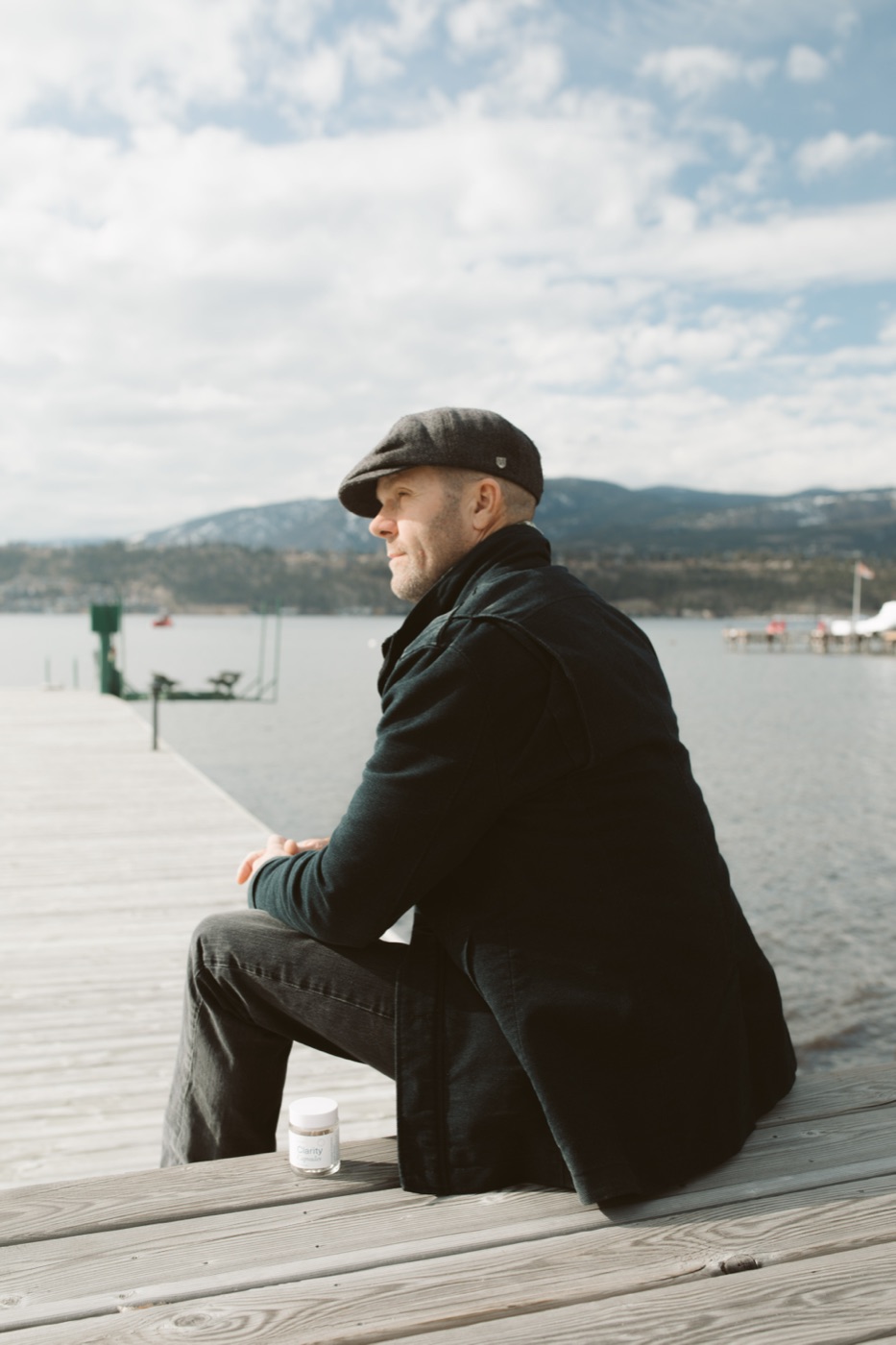
What the studies cannot measure is the itch. The retired engineer who starts building furniture. The man on the dock above, who is not thinking about anything in particular, which is often when the good ideas turn up.
We are not going to pretend a capsule does that. We will say that a great many people over fifty describe the weeks after they start as the first time in years that they wanted to make something, and that wanting is most of the battle.
The other mushrooms in the jar
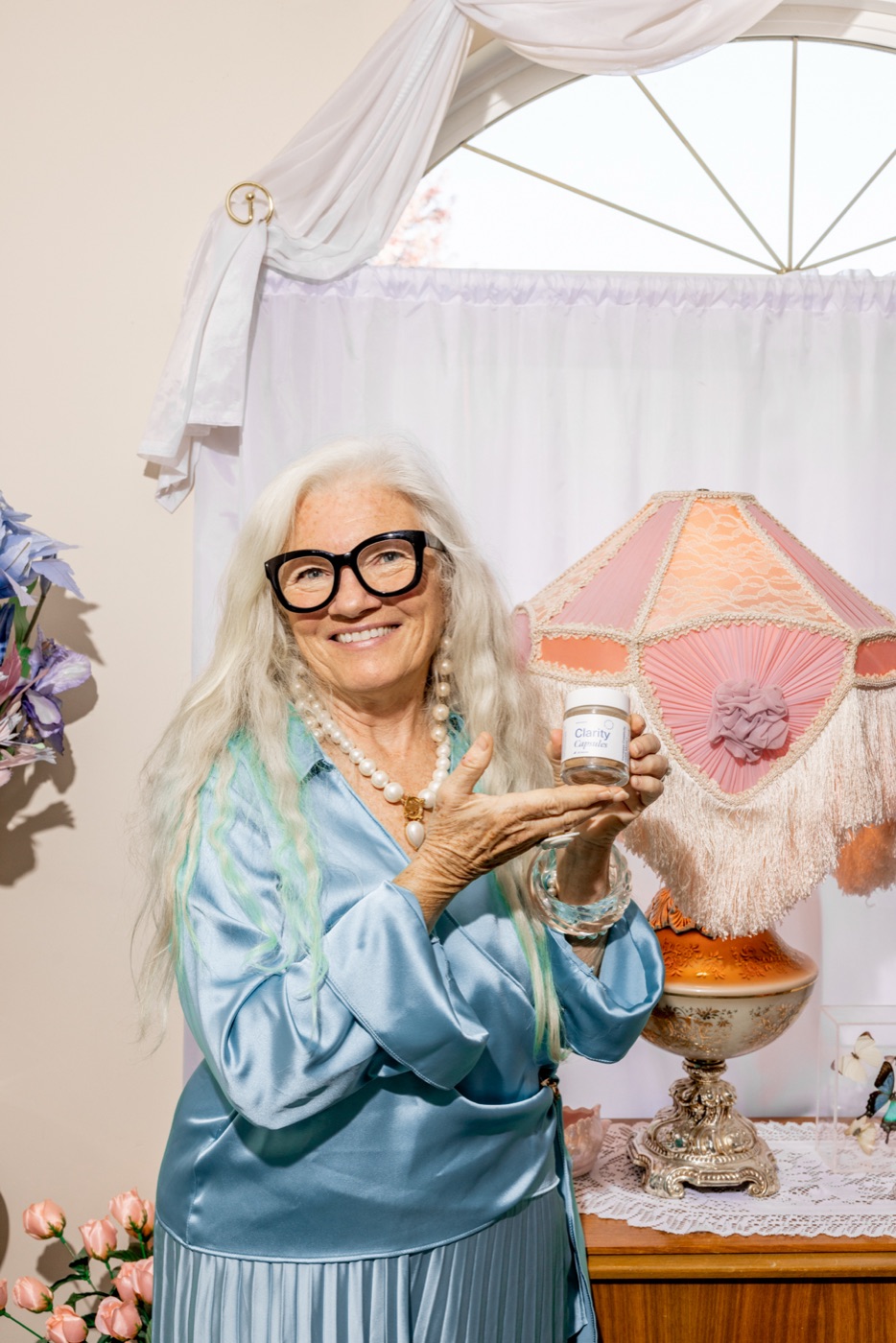
Every Clarity capsule carries Lion’s Mane, Reishi and Chaga alongside the psilocybin, and the Lion’s Mane is there for a reason that has nothing to do with feeling anything on the day. It is also, not by accident, the mushroom in the Rootman stack above. In a double blind trial of 30 Japanese adults aged 50 to 80 with mild cognitive impairment, sixteen weeks of Lion’s Mane at 3 grams a day raised scores on a cognitive function scale compared with placebo at weeks 8, 12 and 16 (Mori and colleagues, Phytotherapy Research, 2009). Four weeks after they stopped, the scores had fallen again, which is the cleanest signal in the trial that the mushroom was doing something while they took it.
It is one small trial in one country in people who already had mild impairment, and it has not been repeated at scale. We would not sell a capsule on it alone. It is also the reason Lion’s Mane and the Support blend exist as products without any psilocybin in them at all, for the people who want the functional side of the story and nothing else.
How to start after fifty
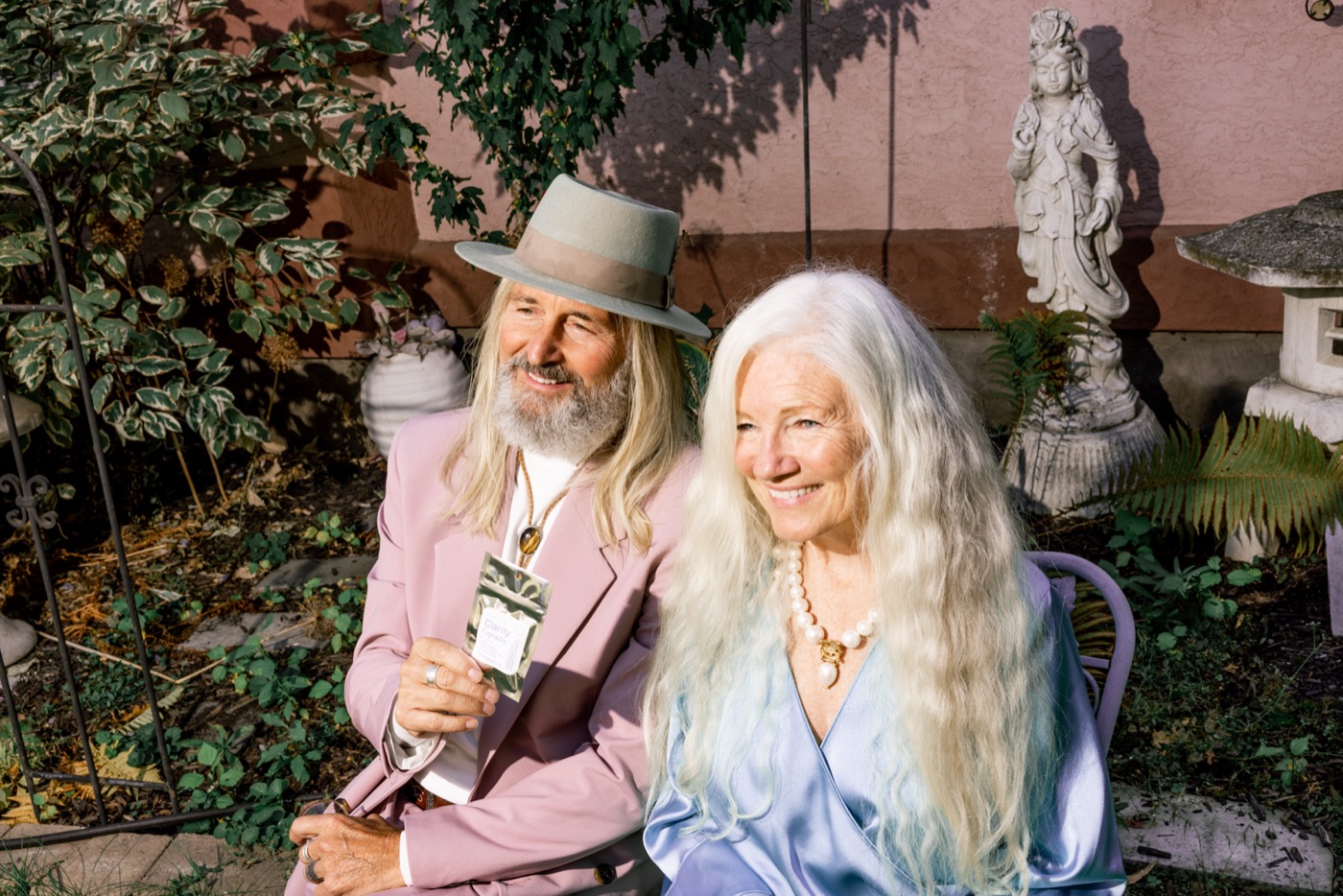
Start lower than you think you need to. Clarity Lite at 75mg exists for anyone who suspects they are more sensitive than average, which describes a lot of people who come to this later in life, and the goal of a microdose is to be subtle yet noticeable, never to be felt in the way a full dose is felt.
Talk to your pharmacist about anything you already take. Psilocybin interacts with some antidepressants and with lithium, and a pharmacist will give you a straight answer faster than a search engine will. The how it works page covers protocols, timing and the days off that matter more than the days on.
If you would rather be pointed somewhere than choose, the two minute quiz matches you to a starting dose. Clarity Lite and Clarity are where most first timers should look, and the usual surprise is how little it takes.
The honest summary
The research on microdosing is real, mixed and improving. The strongest placebo controlled study found that expectation explains a great deal. The largest observational study found that microdosers over fifty did a little better than everyone expected. The openness result is robust but comes from full doses in a clinic. The imaging study built for older brains is recruiting and has not reported.
None of that is a reason to wait. It is a reason to start small, pay attention, and measure the result in phone calls made, classes booked and Saturdays said yes to. That is the data this age group actually cares about, and it is the data nobody is going to collect for you.
Frequently asked questions
Is microdosing safe for people over fifty?
In a 2024 meta analysis of 114 studies covering 3,504 participants, no serious adverse events were reported among healthy people taking classic psychedelics at clinical doses, while about 4 percent of participants with pre existing psychiatric conditions had serious events (Hinkle and colleagues, JAMA Psychiatry, 2024). Microdoses are far smaller. The real question after fifty is drug interactions, so ask a pharmacist.
Does microdosing help with loneliness or social anxiety?
No trial has tested microdosing for loneliness. What exists is a 2022 observational study of 953 microdosers reporting small to medium mood improvements over a month, and a placebo controlled trial of 191 people in which the placebo group improved just as much. People often describe feeling more willing to say yes. Treat that as a starting point, not a result.
What dose should someone over fifty start with?
Lower than a younger adult would, in most cases. Clarity Lite at 75mg of psilocybin mushroom per capsule is the gentlest starting point in our range, and the research doses that produced the openness findings were supervised clinical amounts of a different order entirely. Start low, keep days off, and adjust after two weeks.
Do the functional mushrooms do anything on their own?
One small double blind trial found Lion’s Mane at 3 grams a day improved cognitive scores in 30 adults aged 50 to 80 with mild cognitive impairment over sixteen weeks, with the gains fading a month after stopping (Mori and colleagues, 2009). It has not been repeated at scale. Our Lion’s Mane and Support capsules carry no psilocybin at all.
Sources
Rootman JM, et al. Psilocybin microdosers demonstrate greater observed improvements in mood and mental health at one month relative to non-microdosing controls. Scientific Reports, 2022.
MacLean KA, Johnson MW, Griffiths RR. Mystical experiences occasioned by the hallucinogen psilocybin lead to increases in the personality domain of openness. Journal of Psychopharmacology, 2011.
Szigeti B, et al. Self-blinding citizen science to explore psychedelic microdosing. eLife, 2021.
National Institute on Drug Abuse. Cannabis and hallucinogen use among adults remained at historic highs in 2023. Monitoring the Future, August 2024. 2022 release.
Oregon Health and Science University. Outcomes of psilocybin services in Oregon, a prospective cohort. JAMA Network Open, August 2026.
Office of the US Surgeon General. Our Epidemic of Loneliness and Isolation. 2023. Older adult figures from the National Academies 2020 report.
Mak HW, et al. Hobby engagement and mental wellbeing among people aged 65 years and older in 16 countries. Nature Medicine, 2023.
Park DC, et al. The impact of sustained engagement on cognitive function in older adults, the Synapse Project. Psychological Science, 2014.
AARP Research. The Essential Role of Grandparents, 2025 Grandparents Study. June 2026.
Prochazkova L, et al. Exploring the effect of microdosing psychedelics on creativity in an open-label natural setting. Psychopharmacology, 2018.
Mason NL, et al. Spontaneous and deliberate creative cognition during and after psilocybin exposure. Translational Psychiatry, 2021.
Hinkle JT, et al. Adverse events in studies of classic psychedelics, a systematic review and meta-analysis. JAMA Psychiatry, 2024.
Mori K, et al. Improving effects of the mushroom Yamabushitake (Hericium erinaceus) on mild cognitive impairment. Phytotherapy Research, 2009.
University of California, Berkeley. PLASTICITY, NCT06367738. Recruiting, no results reported.
This article is for information only and is not medical advice. Several studies described here used supervised clinical doses, which are a different activity from microdosing. Talk to a pharmacist or physician about interactions with any medication you take.