




The Dose
The short version
A quiet group of Christians, including ordained clergy, is exploring psilocybin as a way to feel closer to God. It is not as fringe as it sounds. In a Johns Hopkins study published in 2025, 96 percent of religious leaders who took psilocybin rated it among the five most spiritually significant experiences of their lives, and 92 percent called it “profoundly sacred.” The research is real, the experiences are real, and so are the hard questions. Here is the honest version, with the studies on the table and zero hype.
On a spring morning in 1962, ten divinity students swallowed a capsule, walked into a chapel on Good Friday, and went looking for God. Most of them say they found something.
Sixty years later that strange little experiment has quietly grown into a movement. Pastors, priests, and lifelong churchgoers are sitting down in clinical trials and carefully held retreats, taking psilocybin mushrooms with intention, and coming back describing some of the most sacred hours of their lives. Not a party. A pilgrimage.
If that makes you a little uncomfortable, welcome to the club. It makes a lot of people uncomfortable, including some of the people doing it. So let’s not hand-wave it either direction. Let’s look at what the research actually shows, where mushrooms fit, and the questions worth sitting with before you ever consider it.
Christians and mushrooms? Isn’t that supposed to be a hard no?
For most of modern church history, yes. But the ground is shifting. The share of US adults who identify as Christian fell to 62 percent in 2023 to 2024, down from 78 percent in 2007, while the religiously unaffiliated climbed to 29 percent (Pew Research Center, 2025). Plenty of those people did not lose interest in God. They lost the felt sense of Him.
At the same time, mushrooms went mainstream. Lifetime psilocybin use among American adults rose to 12.1 percent, roughly 31 million people, in 2023, up from 10 percent in 2019 (Annals of Internal Medicine, 2025). Put a spiritual hunger next to a cultural moment, and curiosity was always going to follow.
Here is a word most people have never heard: entheogen. Scholars coined it in 1979 from Greek roots that mean, roughly, “generating the divine within” (Ruck et al., 1979). It was meant to describe plants and fungi used not to escape reality, but to touch the sacred. That framing is the whole ballgame here. The people in this story are not chasing a high. They are chasing a holy hour.
What does the research say about mushrooms and mystical experience?
It says the effect is real, measurable, and durable. In the landmark Johns Hopkins study, 67 percent of healthy volunteers rated a single high-dose psilocybin session as the single most, or among the five most, spiritually significant experiences of their entire lives (Griffiths et al., 2006). These were not thrill-seekers. They were ordinary, spiritually active adults.
The stickiness is the surprising part. Fourteen months later, those ratings barely moved. Two-thirds still ranked the session among the most spiritually significant moments of their lives, and most said it lifted their long-term sense of well-being and life satisfaction (Griffiths et al., 2008). A single afternoon, remembered like a wedding day, more than a year on.
Researchers even built a tool to measure this, the Mystical Experience Questionnaire, which scores things like a sense of unity, sacredness, transcendence of time, and the feeling that what you encountered was more real than ordinary life (Barrett et al., 2015). When scientists talk about a “complete” mystical experience, that is the rubric they mean.
None of this proves God exists. No honest scientist claims it does. What the data shows is narrower and still remarkable. Under the right conditions, psilocybin reliably opens a door that millions of people walk through and describe in the language of the sacred. What waits on the other side is the part faith has always wrestled with.
Clergy took psilocybin in a lab. Here is what they reported.
This is where it gets hard to dismiss. Johns Hopkins and NYU recruited religious leaders from major world traditions, gave them psilocybin under supervision, and tracked what happened. After a long delay, the results were published in 2025: 96 percent rated at least one session among the five most spiritually significant experiences of their lives, and 42 percent called one the single most profound experience they had ever had (Griffiths et al., 2025).
Read that again. These were professionals who had spent their whole careers inside the sacred. Pulpits, confessionals, hospital bedsides, decades of prayer. And nearly all of them placed a single mushroom session near the summit of their spiritual lives.
One of those participants, an Episcopal priest named Hunt Priest, went on to found Ligare: A Christian Psychedelic Society after his sessions. He is open about it. He did not leave the church. He went deeper into it. For a number of these leaders, the experience did not compete with their faith. It rhymed with it.
Notice the red bar though. Almost half the clergy also rated a session among the most psychologically challenging things they had ever been through. This is not a gentle spa day for the soul. Awe and difficulty tend to ride in together, which is something every mystic across history already knew.
Does it actually make people more religious, or less?
More, in a direction nobody expected. A survey of 4,285 people who had encountered what they called God or “Ultimate Reality” found that among lifelong atheists, roughly two-thirds no longer identified as atheist after a psychedelic experience (Griffiths et al., 2019). People walked in certain there was nothing, and walked out unable to say that anymore.
There is a fascinating wrinkle for Christians here. People who had a spontaneous, non-drug encounter most often named what they met as “God.” People who had a psilocybin encounter most often called it “Ultimate Reality.” Same overwhelming sense of the sacred, different words for the door. For a believer, that is either a translation problem or a confirmation, depending on where you stand.
So how are Christians actually doing this?
Two very different ways, and the difference matters more than almost anything else. The path you choose shapes the experience, the risk, and the honest expectations you should bring to it.
The daily microdose. A subtle amount, taken to support calm and presence rather than to trigger visions. Many people fold it into a morning rhythm of prayer, scripture, journaling, or a walk. If that is your lane, the gentlest starting points are Clarity Capsules at 125mg or the even lighter Mini Capsules at 30mg. The goal is not a trip. It is a quieter, more open posture during the practices you already keep.
Here is the honest caveat, and it matters. The largest placebo-controlled study of microdosing found that people who microdosed improved on mood and well-being, but so did the placebo group, by the same amount (Szigeti et al., 2021). The benefit tracked what people believed they took, not what they actually took. For a contemplative practice that is not nothing, expectation and intention are powerful, but you should know the pharmacology is doing less of the lifting than the ritual is.
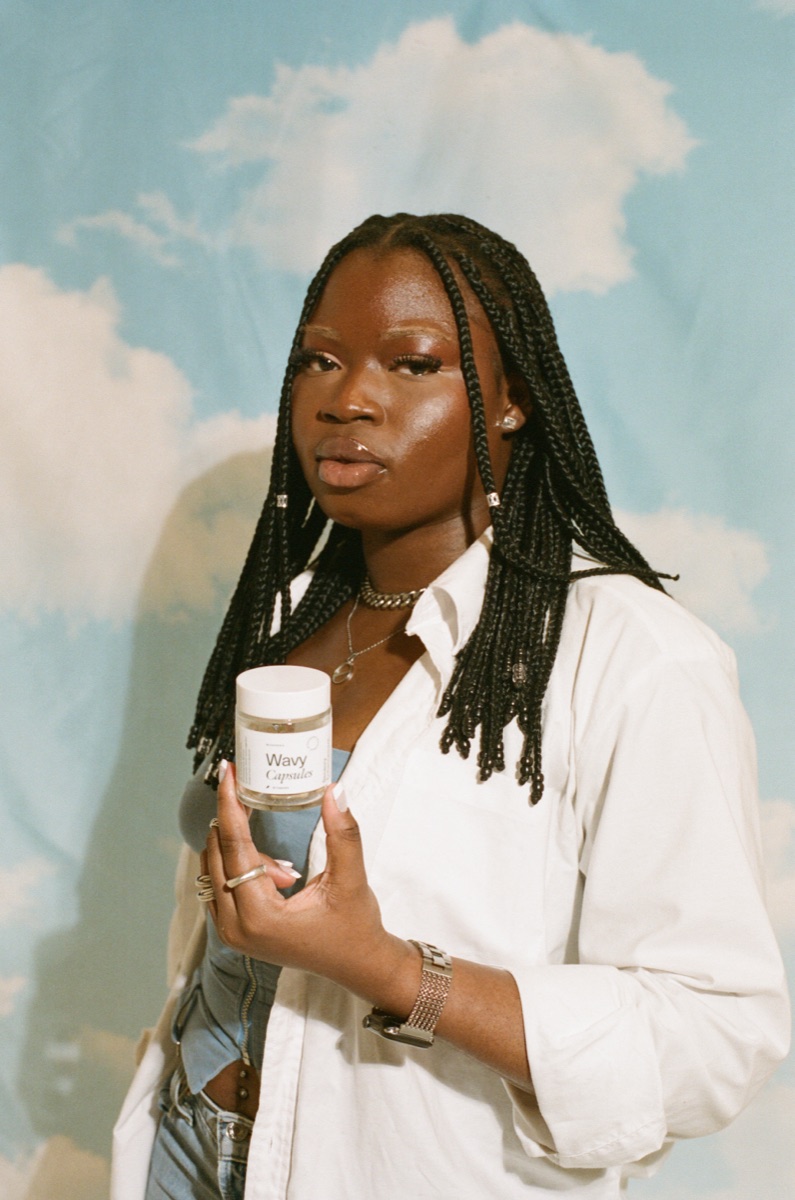
The intentional journey. This is the higher-dose, set-aside, clear-the-calendar experience that the mystical research actually studied. The Johns Hopkins sessions used substantial doses, not micro amounts. People exploring this seriously use products like Wavy at 300mg or Macro at 450mg, and they do it with enormous care: a safe and quiet place, a sober and trusted person present, hours of open space, and an intention set like a prayer before they begin.
If you have no idea where you would even land on that spectrum, do not guess. Our two-minute quiz walks you through experience level, intention, and sensitivity, then points you to a starting place that actually fits you. Start low. You can always go slower. You can never un-take a dose.
Is this even allowed, legally and theologically?
Legally, the honest answer is complicated and you should not skip this part. Psilocybin remains a Schedule I substance under US federal law, which means it is not federally legal anywhere. A few narrow state exceptions exist: Oregon opened supervised service centers under Measure 109, and Colorado is rolling out licensed healing centers under Proposition 122 (psilocybin law overview, 2025). Know the rules where you live. We are not here to help anyone break them.
Theologically, there is a real and unfinished debate, and good-faith Christians land on both sides. Some argue you cannot shortcut grace, that an engineered experience is not the same as a gift freely given, and that chasing a feeling can become its own quiet idol. Others point to a God who, in Genesis, calls every seed-bearing plant good, and ask why a mushroom should be off the table when the whole created world is meant to point back to its maker. The theologian Ron Cole-Turner has written thoughtfully on exactly this tension (Journal of Psychedelic Studies, 2024).
We are a mushroom company, not a pulpit, so we will not pretend to settle that for you. What we will say is this: the people doing this thoughtfully are not treating a capsule as a vending machine for God. They are treating it as one more thing that can quiet the noise enough to listen. The seeking is the point. The mushroom is just the doorway, and a doorway is not the room.
Read this part slowly
This article is information, not medical or spiritual advice. Psilocybin is not for everyone. It can interact dangerously with certain medications, especially SSRIs and lithium, and it is not appropriate for people with a personal or family history of psychosis or bipolar disorder. Higher-dose experiences can be intense and difficult. If you are considering anything beyond a microdose, talk to a qualified professional, never do it alone, and respect the law where you live.
Where to start if you are genuinely curious
Start with your intention, not your order. Ask yourself what you are actually hoping for. Calm and consistency inside the prayer life you already have points one direction, a single set-apart encounter points another. If it is the gentle, daily lane, a low microdose like Clarity or Mini paired with a fixed practice is the sane place to begin.
And do not do the spiritual part alone. Every serious tradition in this space, from the ancient ones to the new communities forming around intentional mushroom use, says the same thing: meaning is made in company. A trusted friend, a guide, a small circle, someone to help you carry what comes up and make sense of it after. If you want help picking a starting point that matches your experience and intention, the Microgenix quiz is built for exactly that.
Frequently asked questions
Is using psilocybin a sin?
Christians genuinely disagree, and we are not the ones to rule on it. Some see it as escapism or an attempt to shortcut grace. Others point to a creation God called good and to the 96 percent of clergy in a 2025 Johns Hopkins study who called their sessions among the most spiritually significant of their lives. It is a question for your conscience, your community, and your own discernment.
Does the research prove psilocybin connects you to God?
No, and anyone who says so is overselling it. The studies show that psilocybin reliably occasions mystical-type experiences that people rate among the most meaningful of their lives (Griffiths et al., 2008). What those experiences ultimately are, neurochemistry, encounter, or both, is exactly the question science cannot answer and faith has always lived inside.
Should I microdose or take a full dose to connect spiritually?
The mystical-experience research used substantial doses, not microdoses, so the dramatic “encounter” findings come from journeys, not daily microdosing. Microdosing is subtler, and a major 2021 study found its benefits were largely driven by expectation rather than the compound itself. Match the dose to your honest intention, and start low either way.
Is it legal where I live?
Psilocybin is federally Schedule I in the United States, so it is not federally legal. Only narrow state programs, like Oregon’s supervised centers and Colorado’s healing centers, allow regulated access, and the rules vary widely. Always check your local laws before doing anything.
Is it safe?
It is not risk-free. Nearly half of clergy in the 2025 study rated a session among their most psychologically challenging experiences, and psilocybin is unsafe with certain medications and mental-health histories. Set, setting, sober support, and honest screening are not optional. They are the difference between a meaningful experience and a harmful one.
The seeking is the point
Strip away the controversy and you are left with something very old. People have always climbed mountains, fasted, sat in silence, and yes, eaten the strange things that grow in the dark, all to feel less alone in the universe. A growing group of Christians is simply adding one more humble doorway to that ancient list, and walking through it with reverence instead of recklessness.
Whatever you believe about mushrooms, that hunger to be met is worth taking seriously. If your curiosity is real, treat it the way you would treat anything sacred. Slowly, honestly, in good company, and with the law and your own conscience kept close. If you want a thoughtful place to begin, take the quiz and let your intention lead.