




Blog
From Penicillin to Psilocybin: How Mushrooms Keep Rewriting Medicine
A headline tore through everyone’s feed this month: an 80-year-old woman, ten years deep into Alzheimer’s, speaking in full sentences again after a single dose of mushrooms. It is the kind of story that makes you want to believe in magic. So let’s do something unfashionable with it. Let’s read it carefully, and then zoom way out, because the real story is bigger and far more interesting than one miracle.
Mushrooms and the fungi they belong to have been quietly handing medicine its biggest breakthroughs for almost a hundred years. Your antibiotics, your cholesterol pill, the drug that made organ transplants possible: all of them started in a fungus. The viral Alzheimer’s story is not the beginning of that relationship. It is the newest, and frankly the shakiest, chapter in it. Here is the honest version.
The headline blowing up your feed
In May 2026, a case report appeared in Frontiers in Neuroscience describing a woman in her eighties with advanced Alzheimer’s who, after a single high dose of psilocybin-containing mushrooms, briefly regained spontaneous speech, continence, and mobility. The improvements reportedly started about 19 hours later and lingered for weeks before fading.1 Then a Bryan Johnson post sent it around the internet, and the word “cure” started flying.
Here is what the actual authors wrote: the improvements were transient, and the findings “do not imply disease reversal.” Their careful suggestion was that some residual function may survive in advanced neurodegeneration and become temporarily accessible. That is a fascinating idea. It is also a single patient, with no control group, and a benefit that wore off. In medicine, that is called a case report, and a case report is a starting line, never a finish line.
So why are we, a mushroom company, throwing cold water on a mushroom miracle? Because the truth has a much better track record than the hype. And the truth is genuinely jaw-dropping once you see the full arc.
It started with a moldy petri dish
September 1928. Alexander Fleming comes back from holiday to a messy lab and notices a blob of Penicillium mold has killed the bacteria around it on a culture plate.2 That accident became penicillin, the first true antibiotic. Fleming only spotted it; Howard Florey and Ernst Chain at Oxford did the brutal work of turning it into a usable drug, and the first patient was treated in 1941. The three shared the Nobel Prize in 1945.2
It is hard to overstate what a mold did here. Infections that routinely killed people became things you shrug off with a prescription. While we are on the theme of fungi fighting disease, another Penicillium species gave us griseofulvin, the first oral drug that could clear stubborn ringworm.9 Fungus versus fungus. Medicine has been mining this kingdom ever since.
The fungus in millions of medicine cabinets
If someone you love takes a statin for cholesterol, thank a mold. In 1973, Japanese biochemist Akira Endo isolated the first statin compound from Penicillium citrinum.3 That early molecule was never sold, but it opened the door. Merck soon isolated lovastatin from a different fungus, Aspergillus terreus, and in September 1987 it became the first FDA-approved statin under the name Mevacor.3 Statins went on to become one of the most prescribed drug classes on earth. Born in fungi.
The mushroom that made transplants possible
Here is one almost nobody knows. Modern organ transplantation runs on a drug pulled from a soil fungus called Tolypocladium inflatum. Its immune-calming powers were identified in 1972, and the compound, cyclosporine, was approved by the FDA in 1983.4 By selectively quieting the immune cells that attack a new organ, it turned transplants from desperate gambles into routine, life-saving surgery. A fungus is the reason a stranger’s kidney can keep you alive.
A century of fungal medicine
From a rye fungus to LSD
There is a fungus called ergot that grows on rye, and it has one of the strangest medical legacies of all. Its compounds gave us ergotamine for migraines, and in the late 1930s a Sandoz chemist named Albert Hofmann was tinkering with those same ergot alkaloids when he synthesized LSD. He stumbled onto its psychoactive effects in 1943.5 That accident, born from a grain fungus, is the historical root of the entire field of psychedelic medicine we are about to walk into. Which brings us back to mushrooms.
The psychedelic renaissance: psilocybin enters Phase 3
For decades psilocybin research was frozen by prohibition. Then a wave of carefully run trials thawed it. This is where the science actually gets strong, and where a mushroom compound is closer to the pharmacy shelf than most people realize.
Treatment-resistant depression
The company COMPASS Pathways has been testing a synthetic version of psilocybin for depression that has not responded to other treatments. The FDA gave it Breakthrough Therapy designation back in 2018, and the Usona Institute received its own designation for major depression in 2019.6 In June 2025, COMPASS announced its first Phase 3 trial hit its target: in 258 patients, a single 25 mg dose beat placebo on the standard depression scale at six weeks, with the benefit holding for months.7 In February 2026, a second Phase 3 trial hit its target too.7 The company says it plans to file with the FDA by the end of 2026.
Alcohol use disorder
One of the cleaner datasets comes from NYU. In a 2022 trial published in JAMA Psychiatry, 93 people with alcohol use disorder received either psilocybin or an active placebo alongside therapy. The psilocybin group cut their heavy drinking days to 9.7 percent, versus 23.6 percent for placebo, and nearly half were fully abstinent in the final month, versus a quarter on placebo.8 No serious adverse events in the psilocybin group. That is a genuinely strong signal from a controlled trial.
Psilocybin-assisted therapy vs placebo: heavy drinking days
Facing the end of life
The trials that really reopened this field came in 2016, when Johns Hopkins and NYU each published studies giving psilocybin to patients with life-threatening cancer. At Hopkins, 51 patients received it, and a large majority showed clinically meaningful drops in depression and anxiety that lasted at least six months from a single session.10 NYU’s 29-patient trial found similarly durable relief.11 For people staring down mortality, that is not a small thing.
The pattern is consistent: fungi keep producing compounds that change how the body and brain work, sometimes profoundly. The discipline is in proving it.
Everyday functional mushrooms: what the early evidence shows
Not every mushroom story involves a clinic. The functional mushrooms in wellness aisles have their own research, and honesty matters here too, because this is where marketing tends to outrun the science.
Lion’s Mane contains compounds that, in lab studies, stimulate nerve growth factor and support neuroplasticity. A small 2009 trial in 30 older adults with mild cognitive impairment saw better cognitive scores over 16 weeks, but here is the part the supplement ads skip: the benefit faded after participants stopped taking it, and the Alzheimer’s Drug Discovery Foundation is clear that larger, longer trials are still needed.12 Promising and preliminary are allowed to be true at the same time.
Turkey Tail is the closest thing to a mushroom that is actually a sanctioned cancer drug. Its extract, known as PSK or Krestin, has been an approved adjuvant therapy in Japan since the 1970s, given alongside chemotherapy for cancers like gastric and colorectal.13 It is not FDA-approved in the United States, but it is a real, regulated example of fungal medicine in daily clinical use somewhere on earth.
How to read a mushroom headline without getting played
You now have a cheat sheet, whether you noticed or not. When the next “mushrooms cure X” headline lands, ask three questions. How many patients, one or hundreds? Was there a control group, or just a story? And did the effect last, or was it transient like that Alzheimer’s case? The penicillin-to-psilocybin arc is thrilling precisely because it survived those questions. The viral Alzheimer’s report has not, not yet, and the researchers themselves said so.
Where this is heading
Somewhere right now, the Alzheimer’s case report is doing its real job: nudging a researcher to design an actual trial. That is how the moldy petri dish became penicillin and how a cancer-ward experiment became a Phase 3 program. Mushrooms have earned medicine’s attention the slow way, one rigorous study at a time. The hype cycle will keep sprinting ahead of the evidence. Our job, and yours, is to enjoy the wonder without switching off the brain.
We translate the science. You make the call.
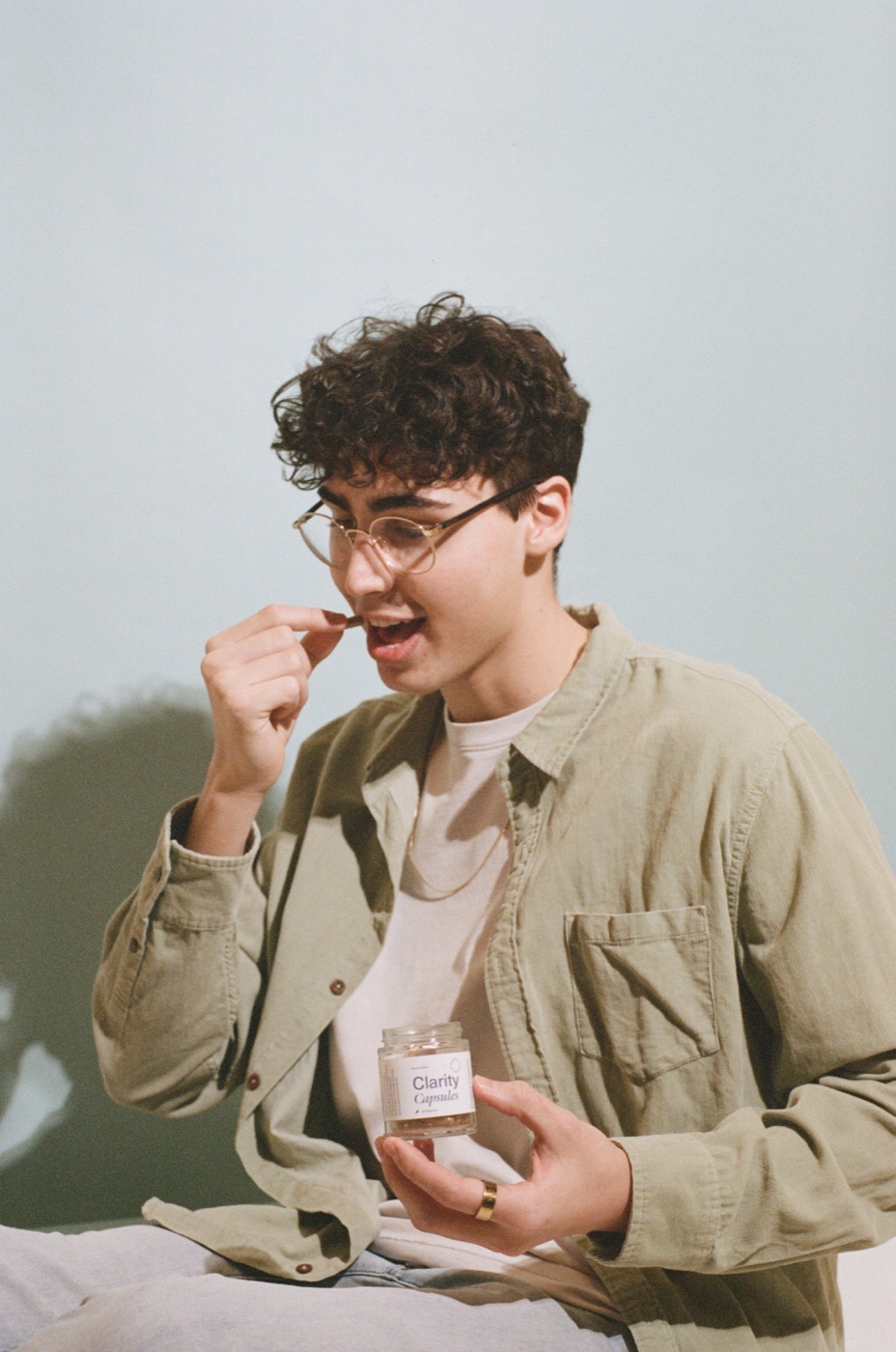
We are not in the miracle business. Microgenix makes carefully dosed products for curious adults, from our gentle Clarity microdose to our non-psychedelic Support nootropic blend, and we read the studies so you can make informed choices. Not sure where you would even start?
- Lago, Cerveira, Simonet. “Transient multidomain functional improvement in advanced Alzheimer’s disease following high-dose psilocybin-containing mushroom administration: a case report.” Frontiers in Neuroscience, 28 May 2026. DOI 10.3389/fnins.2026.1813281. Link
- American Chemical Society, “Discovery and Development of Penicillin.” Link
- “A historical perspective on the discovery of statins,” PMC. Link
- “Cyclosporine biosynthesis in Tolypocladium inflatum,” mBio. Link
- Britannica, “Albert Hofmann.” Link; Scientific American, “LSD Finds Its Discoverer.” Link
- COMPASS Pathways FDA Breakthrough Therapy designation, 2018. Link; Usona Institute Breakthrough Therapy designation, 2019. Link
- COMPASS Pathways Phase 3 COMP005 (2025) and COMP006 (2026) primary-endpoint announcements. COMP005, COMP006
- Bogenschutz et al. “Percentage of Heavy Drinking Days Following Psilocybin-Assisted Psychotherapy…” JAMA Psychiatry, 2022. Link
- “Griseofulvin: An Updated Overview,” PMC. Link
- Griffiths et al. (Johns Hopkins), Journal of Psychopharmacology, 2016. Link
- Ross et al. (NYU), Journal of Psychopharmacology, 2016. Link
- Alzheimer’s Drug Discovery Foundation, “Lion’s Mane” rating (incl. Mori et al. 2009). Link
- “Polysaccharide-K (PSK/Krestin)” anticancer review, PubMed. Link
- Szigeti et al. “Self-blinding citizen science to explore psychedelic microdosing.” eLife, 2021. Link