




Blog
The Neuroplasticity Stack: Psilocybin, Lion’s Mane, and Peptides
Your brain can physically change its structure throughout your entire life. That’s not motivation-poster talk. It’s called neuroplasticity, and we now have peer-reviewed research showing specific compounds that appear to support it.
A 2025 systematic review in Brain Sciences found that 15 of 16 studies demonstrated psychedelic-induced neuroplasticity. That’s a striking level of consistency across different labs, different methods, and different countries. The concept of a “neuroplasticity stack,” combining psilocybin with mushroom nootropics and neuropeptides, has grown out of this research.
The global nootropics market reached $5.1 billion in 2025 and is projected to hit $22.85 billion by 2033 at a 20.2% CAGR (Grand View Research). That’s a lot of people looking for ways to support brain health. This post breaks down what the science actually says about each layer of the stack, and where the evidence runs thin.
Learn more about how microdosing works →
Key Takeaways
- Psilocybin increases dendritic spine density by roughly 10% within 24 hours, persisting over a month (Neuron, 2021).
- Lion’s Mane activates nerve growth factor through a different pathway, making it a natural pairing with psilocybin.
- Peptides like Semax and BPC-157 show neuroplasticity potential, but human data is limited.
- Honest gaps exist. No published study has tested the full stack together.
What Is Neuroplasticity and Why Does It Matter?
Neuroplasticity is your brain’s ability to reorganize itself by forming new neural connections. A 2021 study in Neuron showed that a single dose of psilocybin produces roughly a 10% increase in dendritic spine size and density in the frontal cortex within 24 hours. Those structural changes persisted for more than a month.
Think of dendritic spines as the physical contact points between neurons. More spines, with greater density, means more connections. More connections means a brain that’s better equipped to learn, adapt, and recover.
This isn’t just relevant for people dealing with cognitive challenges. Anyone interested in learning faster, building better habits, or maintaining cognitive sharpness as they age has a stake in neuroplasticity. The question is which tools, if any, actually support it.
How Does Psilocybin Promote Neuroplasticity?
Psilocybin’s neuroplasticity effects are now documented across multiple high-impact journals. A 2024 Nature study found psilocybin produces three times greater functional connectivity change than methylphenidate (Ritalin). That’s a meaningful comparison because it shows psilocybin isn’t just “doing something.” It’s doing something qualitatively different from conventional stimulants.
The Intracellular Discovery
One of the most important recent findings came from a 2023 study in Science by Vargas et al. They found that psychedelics activate intracellular 5-HT2A receptors to trigger plasticity, not the surface receptors most people assumed were responsible. This changes our understanding of the entire mechanism.
Why does that matter? Because it means psilocybin’s neuroplasticity effects happen inside the cell, through a pathway that’s distinct from its acute psychoactive effects. The structural brain changes and the “trip” may be separate processes.
The BDNF Connection
Brain-derived neurotrophic factor (BDNF) is often called fertilizer for neurons. A 2022 study in Neuropsychopharmacology found that psilocybin has 1,000-fold greater affinity for TrkB receptors (the BDNF receptor) than SSRIs. That’s not a small difference. That’s three orders of magnitude.
A 2024 study in the Journal of Psychopharmacology detailed the downstream effects: BDNF-mTOR signaling, increased dendritic branching, and spine density gains in the prefrontal cortex and hippocampus. These are the brain regions most involved in decision-making, emotional regulation, and memory.
And then there’s the network-level picture. A 2025 Cell study found that psilocybin triggers cortical network rewiring. Specifically, it appears to weaken negative-thought loops while strengthening sensory processing pathways. The brain doesn’t just grow new connections randomly. It seems to reorganize in a direction that many researchers find clinically meaningful.
Why Does Lion’s Mane Pair So Well with Psilocybin?
Lion’s Mane mushroom (Hericium erinaceus) targets nerve growth factor (NGF), a complementary growth factor to BDNF. A 2023 study from the University of Queensland published in the Journal of Neurochemistry found that hericerin derivatives activate a pan-neurotrophic pathway via ERK1/2 signaling, enhancing spatial memory in animal models.
NGF and BDNF: Two Growth Factors, One Goal
Here’s the logic behind pairing lion’s mane and psilocybin. Psilocybin primarily boosts BDNF. Lion’s Mane primarily stimulates NGF. These are two different neurotrophic factors that support neuroplasticity through different mechanisms. BDNF strengthens existing connections and promotes new ones. NGF supports the survival and maintenance of neurons themselves.
The compounds responsible for Lion’s Mane’s effects, hericenones and erinacines, have been documented since the 1990s for their ability to stimulate NGF synthesis (IJMS, 2023). This isn’t new science. What’s newer is the understanding of how this pathway complements psilocybin’s BDNF activity.
Cognitive Effects in Healthy Adults
Does this translate to noticeable effects in people? A 2025 double-blind randomized controlled trial found acute cognitive and mood benefits in healthy younger adults taking Lion’s Mane. That’s important because many nootropic studies only test impaired populations. Showing effects in healthy people is a higher bar.
A separate 2025 study found that erinacine A attenuates amyloid-beta plaques in Alzheimer’s disease mouse models. We’re not claiming Lion’s Mane treats Alzheimer’s. But the neuroprotective mechanisms are consistent across multiple research directions.
What Does the Stamets Stack Research Actually Show?
The largest microdosing study to date (n=953) examined the Stamets Stack, a combination of psilocybin, Lion’s Mane, and niacin. Published in Scientific Reports in 2022 by Rootman et al., adults over 55 using the Stamets Stack showed psychomotor improvement from 49 to 68 taps per 10 seconds, roughly a 40% improvement, compared to psilocybin alone.
The Important Caveats
We need to be straight about the limitations. This was an observational study, not a randomized controlled trial. Participants self-reported their usage. There was no placebo control. These are significant limitations that mean we can’t draw causal conclusions from this data alone.
Does that make the finding worthless? No. A 40% psychomotor improvement in an older population is a signal worth investigating further. But it needs replication in controlled settings before anyone should treat it as established fact. We’ve found that being honest about research limitations actually helps people make better decisions.
What we can say: the nootropic mushroom stack concept has at least one large-scale study suggesting a real effect. That’s more than most nootropic combinations can claim. It’s a starting point, not a finish line.
How Do Reishi and Chaga Support Neuroprotection?
A neuroplasticity stack isn’t just about growing new connections. It’s also about protecting existing ones. A 2024 study in Biomedicine and Pharmacotherapy found that Reishi ameliorates cognitive impairments through beta-amyloid inhibition and NF-kB/MAPK modulation. That’s a fancy way of saying it appears to reduce two major drivers of cognitive decline.
Reishi: The Anti-Inflammatory Layer
Neuroinflammation is one of the biggest enemies of neuroplasticity. When your brain is inflamed, its capacity to form new connections drops. Reishi’s documented modulation of the NF-kB pathway is relevant here because NF-kB is a master regulator of inflammatory responses throughout the body, including the brain.
Chaga: Protecting the Environment
A 2025 study in IJMS found that Chaga extract reduces pro-inflammatory cytokines and improves spatial memory in Alzheimer’s disease mouse models. Again, we’re not claiming these mushrooms treat disease. But the research suggests they may create a less inflammatory, more plasticity-friendly environment in the brain.
Think of it this way. Psilocybin and Lion’s Mane are the growth signals. Reishi and Chaga help protect the environment where that growth happens. Different roles in the same system.
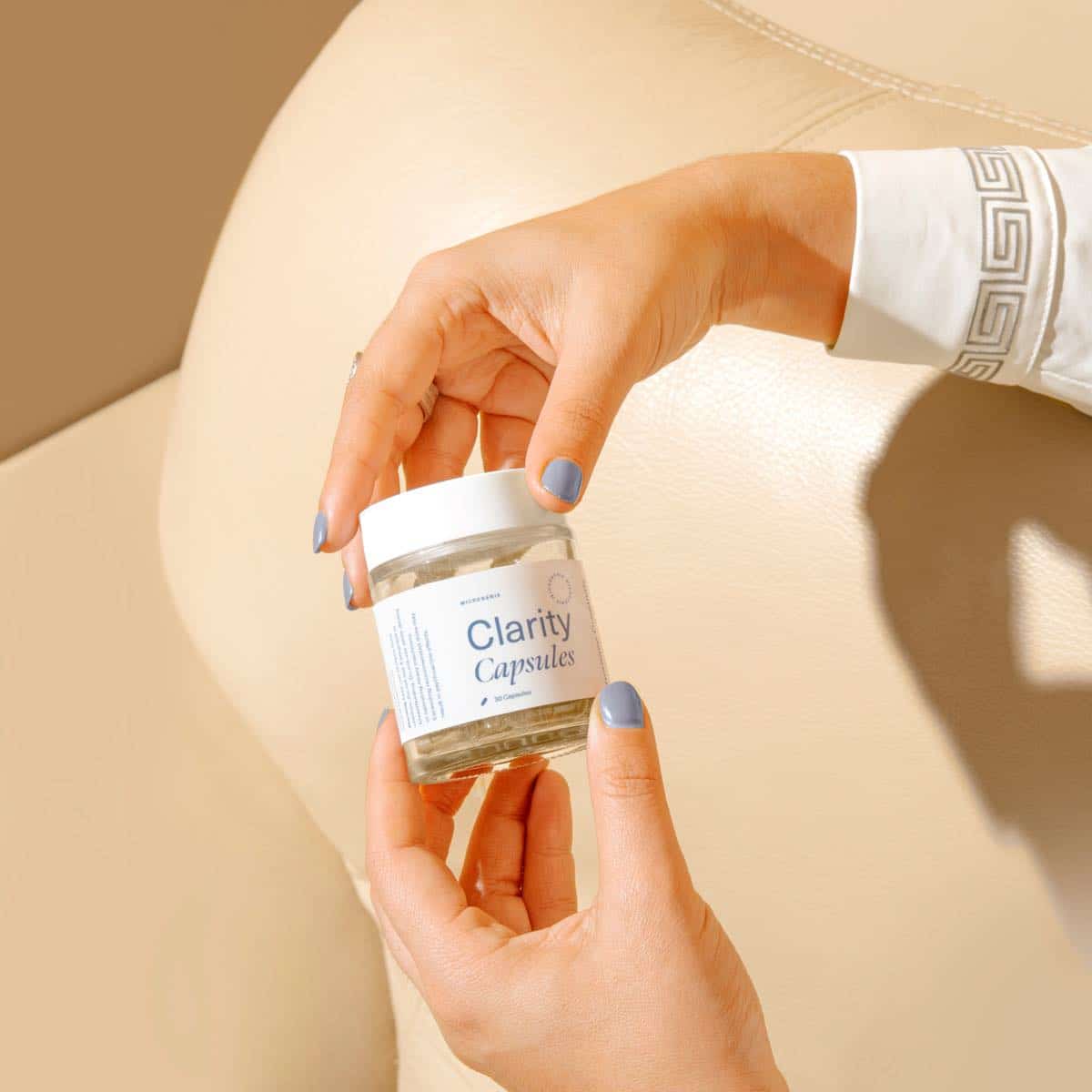
How Do Clarity Capsules Map to This Research?
Clarity Capsules contain 125mg Psilocybe cubensis, 225mg Lion’s Mane, 50mg Reishi, 50mg Chaga, and 50mg Ginger Root. This formulation follows the logic of the Stamets Stack while adding the neuroprotective mushrooms discussed above. The Rootman et al. study (Scientific Reports, 2022) provides the closest published research to this combination approach.
The psilocybin-to-Lion’s Mane ratio matters. At 125mg to 225mg, Lion’s Mane is the largest ingredient by weight. That’s consistent with the research suggesting NGF stimulation requires meaningful dosing of hericenone and erinacine compounds.
Many customers find the multi-mushroom approach more balanced than psilocybin alone. The Reishi and Chaga aren’t filler. They serve the neuroprotective function that the 2024 and 2025 studies suggest is important for creating a brain environment where neuroplasticity can actually stick. Ginger Root supports absorption and gut comfort, a practical detail that matters when you’re taking capsules consistently.
What About Peptides and Neuroplasticity?
Beyond the mushroom-based nootropic mushroom stack, some biohackers add neuropeptides as an advanced layer. Semax, a synthetic peptide developed in Russia, has been shown to increase BDNF protein 1.4-fold and exon III BDNF mRNA 3-fold in the hippocampus (PubMed, 2006). That’s real, published data on a compound that directly targets the same growth factor psilocybin influences.
Semax: The BDNF Amplifier
Semax’s mechanism is straightforward in concept. It appears to amplify BDNF expression directly. If psilocybin opens windows for neuroplasticity and Lion’s Mane provides NGF support, Semax could theoretically add another layer of BDNF amplification. Could. The word “theoretically” is doing work in that sentence.
Most Semax research comes from Russian institutions, and the compound isn’t approved in North America. The data is interesting but limited. We’d love to see larger, Western-run trials confirm what the existing studies suggest.
BPC-157: The Gut-Brain Peptide
BPC-157 (Body Protection Compound-157) modulates serotonergic and dopaminergic systems and shows CNS neuroprotection in animal models (PMC, 2021). Biohackers often discuss it for recovery and cognitive support. But here’s the reality: out of hundreds of published papers, human clinical data is nearly nonexistent.
Is the animal data promising? Some of it, yes. But rodent brains aren’t human brains. We think it’s worth watching this space without making strong claims about what BPC-157 does for human cognition.
The Dihexa Problem: Why Source Quality Matters
We need to talk about Dihexa. This peptide was widely discussed in nootropics communities as a potent neuroplasticity agent. The problem? The foundational paper making those claims was retracted for data fabrication. Full stop. The core evidence was fraudulent.
This matters beyond Dihexa itself. It’s a reminder that not every exciting-sounding compound has honest science behind it. Retracted papers still circulate in supplement marketing and forum posts. When someone recommends a peptide for microdosing neurogenesis, ask for the source. Then check whether that source still stands.
The broader peptide space has legitimate research. But the Dihexa retraction is a cautionary tale about building protocols on shaky foundations.
What Do We Actually Know vs. What’s Still Unknown?
Fifteen of 16 studies in a 2025 systematic review demonstrated psychedelic-induced neuroplasticity (Brain Sciences). That’s an unusually consistent finding in neuroscience. But consistency in one area doesn’t mean everything in the “neuroplasticity stack” conversation is equally supported.
Strong Evidence
- Psilocybin increases dendritic spine density and functional connectivity (Neuron 2021, Nature 2024, Cell 2025).
- Psilocybin has 1,000-fold greater affinity for TrkB receptors than SSRIs (Neuropsychopharmacology, 2022).
- Lion’s Mane stimulates NGF through hericenone and erinacine compounds (documented since 1990s, confirmed 2023).
- The Stamets Stack showed psychomotor improvement in a large observational study (n=953).
Emerging but Limited Evidence
- Reishi and Chaga neuroprotection (animal models, 2024-2025).
- Semax BDNF amplification (limited human data, mostly Russian studies).
- BPC-157 CNS effects (almost entirely animal research).
Unknown Territory
- No published research on combining all stack components together.
- No long-term safety data on psilocybin-peptide combinations.
- Optimal dosing ratios for the mushroom stack remain unstudied in controlled settings.
- The Stamets Stack study needs RCT replication before drawing firm conclusions.
In our experience, the people who get the most from a neuroplasticity stack are the ones who start with the best-supported components first. Build the foundation before adding advanced layers. That means starting with psilocybin and Lion’s Mane, tracking your response, and only then considering whether additions like peptides make sense for your goals.
Frequently Asked Questions
What is a neuroplasticity stack?
A neuroplasticity stack is a combination of compounds chosen to support the brain’s ability to form new neural connections. The most common version pairs psilocybin with Lion’s Mane mushroom. Advanced versions add neuroprotective mushrooms like Reishi and Chaga, or peptides like Semax. A 2025 Brain Sciences review found 15 of 16 studies confirmed psychedelic-induced neuroplasticity.
Does microdosing psilocybin actually change brain structure?
Research suggests it does. A 2021 Neuron study found a single psilocybin dose increases dendritic spine density by about 10% in the frontal cortex. These changes persisted for over a month. A 2025 Cell study confirmed psilocybin triggers cortical network rewiring after a single dose.
Is the Stamets Stack backed by research?
Partially. The largest microdosing study (n=953) found adults over 55 using the Stamets Stack showed roughly 40% psychomotor improvement (Scientific Reports, 2022). However, this was an observational study without placebo control. The individual ingredients, psilocybin and Lion’s Mane, each have stronger independent evidence.
Are peptides safe to add to a microdosing protocol?
There isn’t enough human clinical data to make safety claims about combining peptides with psilocybin. Semax has some human research. BPC-157 is almost entirely studied in animals. Peptide sourcing quality varies dramatically. Always consult a healthcare provider before combining any of these compounds.
What happened with Dihexa?
Dihexa was promoted in nootropics communities as a powerful neuroplasticity peptide. The foundational research paper was retracted due to data fabrication. This means the core evidence for Dihexa’s neuroplasticity claims is unreliable. It’s a reminder to verify the source behind any compound before building a protocol around it.
Building Your Neuroplasticity Stack: Start with What Works
The science of psilocybin neuroplasticity has moved from speculative to well-documented in just a few years. We have studies in Neuron, Nature, Science, and Cell all pointing in the same direction. Lion’s Mane adds a complementary NGF pathway with its own growing body of evidence. The supporting mushrooms, Reishi and Chaga, contribute neuroprotective effects that researchers are actively investigating.
Peptides remain interesting but earlier in their evidence journey. If you’re drawn to the neuroplasticity stack concept, the strongest starting point is the part with the most research behind it: psilocybin paired with Lion’s Mane and neuroprotective mushrooms.
Curious where to begin? Take the quiz to find the right protocol for your goals, or browse the shop to see how each product maps to the research discussed here. Whatever you choose, start with one variable at a time and track what you notice. Your brain is already capable of change. The question is how you want to support it.