




Blog
Everyone Comes Home Different. What Festivals and Mushrooms Actually Do to People
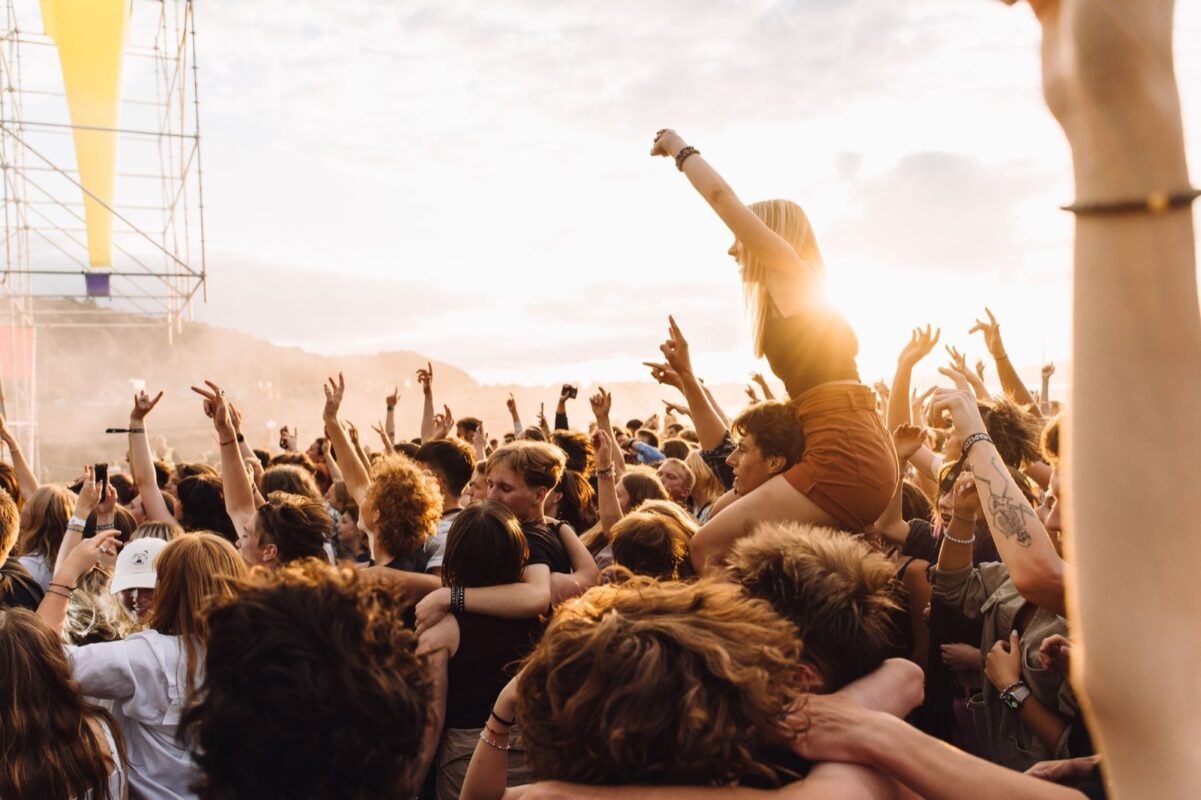
Shambhala wrapped on Monday. Somewhere on the drive back from Salmo there is a car full of people who have not said anything for twenty minutes, and it is not because they are tired.
Everyone who has been to a good festival knows that silence. You come back and people ask how it was and the honest answer is that you cannot compress it into a sentence. Something happened in that field. You are slightly rearranged.
For a long time that was all anyone could say about it. Now there is actual data. Researchers have followed festival-goers for six months, measured how generous they were with real money, tracked what happens to pain thresholds when people dance in time, and tested 4,544 drug samples in a tent at Shambhala. The findings are stranger and more specific than the usual talk about good vibes, and a few of them cut directly against what a company like ours would prefer to tell you.
Key Takeaways
- Six months after a festival, 72.7% of people still reported a transformative experience, slightly more than said so at the event itself.
- Festival-goers gave away 62% of a real cash raffle to strangers. In lab versions of the same game the average is about 28%.
- Mushrooms are not the festival drug the internet thinks they are. In one survey of 1,345 electronic music attendees, only 2.80% of mushroom users took them at a festival. Most use them at home.
- Drug checking services cannot test mushrooms. The equipment does not read them, which is a real and under-discussed gap.
- The best-controlled microdose trials found no difference from placebo. We think you should know that before you read anything else we sell.
The change is real, and it is measurable
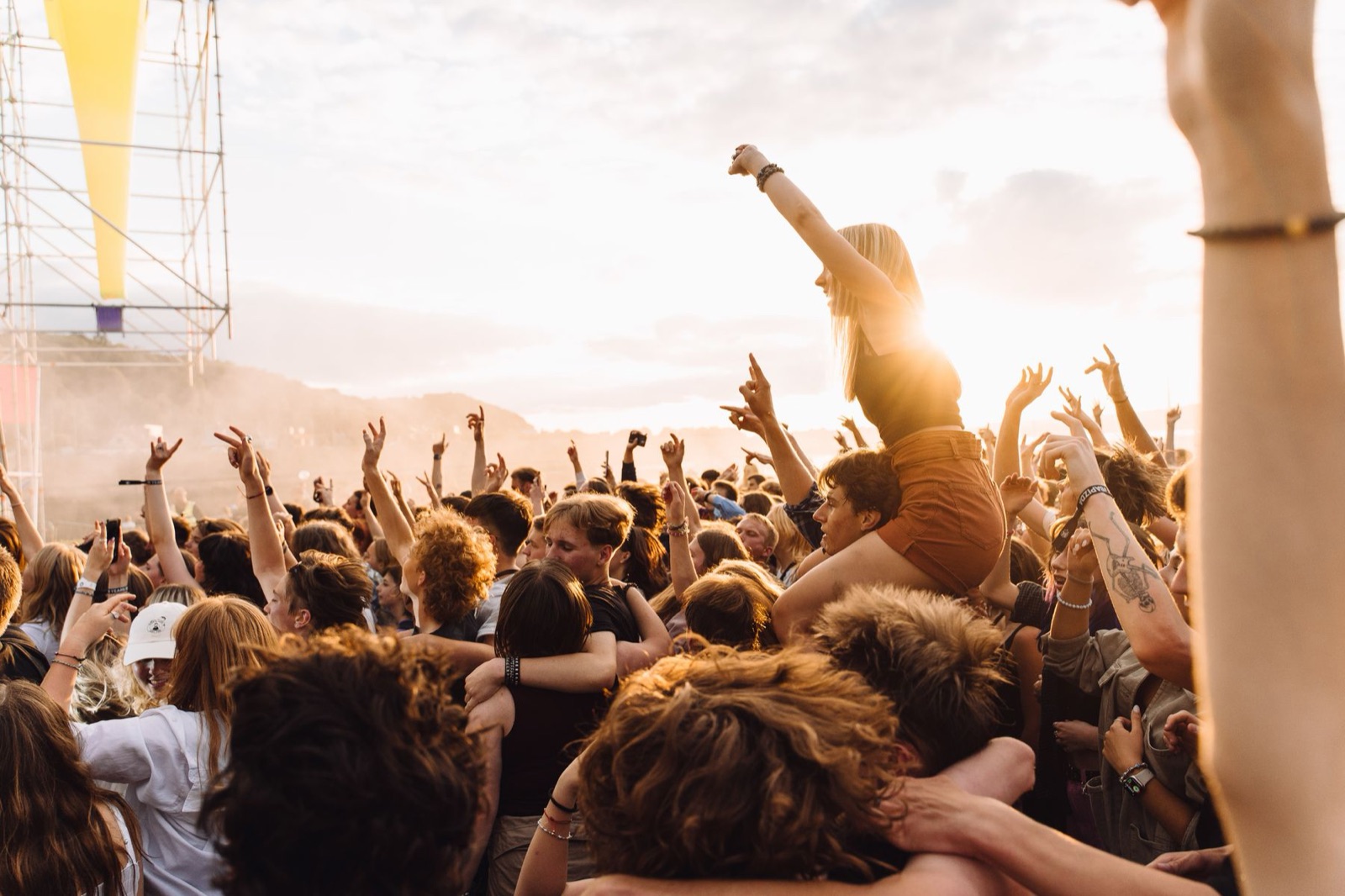
In 2022 a team publishing in Nature Communications ran six field studies across five events, including Burning Man, Latitude in the UK, Lightning in a Bottle, Dirty Bird Campout and a 500-person gathering called Burning Nest. They surveyed people before, during and after. Onsite, 63.2% said they had been at least “somewhat” transformed and 19.5% said “absolutely.”
The interesting part is what happened next. Six months later, with 710 people still responding, the numbers had gone up. Not down. 72.7% reported at least a somewhat transformative experience and 27% said absolutely.
Self-report is easy to be sceptical about, so the researchers also gave people raffle tickets worth real money and let them anonymously give some away. Onsite, participants handed over 62% of them. In standard laboratory versions of that game, people give away roughly 28%. At the six-month follow-up, still 65%.
And here is the bit most write-ups skip, because the authors published a result that did not flatter their own thesis. Feeling transformed did not predict generosity while people were still at the festival. It only predicted it afterwards, immediately and at six months. Whatever is happening, it seems to consolidate on the drive home rather than in the moment.
The Black Rock City Census, which is properly run with university ethics approval and weighted sampling, found something similar in 2025. Of an estimated 71,500 attendees, 76.3% said they carry the event’s principles into their ordinary life afterwards.
Your body does something specific when you move in time with people
This is the part that surprised us most. Moving in sync with other humans is not just pleasant. It measurably changes your pain threshold, which researchers use as a proxy for endorphin activity because you cannot easily measure endorphins in a living brain.
Bronwyn Tarr and colleagues in Robin Dunbar’s Oxford group built a clever study with 264 teenagers, splitting dance into two separate variables, how synchronised it was and how physically hard it was. Both independently raised pain thresholds and both independently increased how close people felt to their group. They did not need each other. Sweating together works. Timing together works. Doing both is why a dancefloor at 2am feels the way it does.
Dunbar’s wider work adds a wrinkle worth knowing. Actively performing music raises the pain threshold. Passively listening does not. Singing along, drumming on something, dancing badly, these are not embarrassing add-ons to the experience. They appear to be the mechanism.
Scale seems to help rather than dilute it. When Daniel Weinstein’s team compared small choirs against a 232-person megachoir, the social closeness gains were significantly larger in the enormous group. Their conclusion was that if there is a ceiling on this effect, it sits somewhere beyond 200 people. Festivals run well past that.
Then there is awe, which has its own research literature. Dacher Keltner and Jonathan Haidt defined it as needing two things, a sense of vastness and a need to mentally reorganise to accommodate it. Paul Piff ran five studies with 2,078 people and found that awe reliably increased generosity and ethical behaviour. In the neatest version, standing in a grove of towering eucalyptus trees for one minute made people more likely to help a stranger and measurably less entitled than a control group staring at a building.
A stage built into old-growth forest is not a design flourish. It is an awe delivery system.
Shambhala is a farm that hosts a festival, not the other way round
Shambhala started in 1998 on the Bundschuh family’s land outside Salmo, British Columbia, with roughly 500 people. The 2026 edition, its 27th, ran from the 24th to the 27th of July for a capacity of about 21,000. Tickets sold out in three hours, before a single artist had been announced.
It is still a working farm. The festival’s own about page notes that the 500-acre Salmo River Ranch goes back to being home to cows, horses, pigs, chickens and miniature donkeys once everyone leaves. Six stages, including a seven-storey pagoda and a beach stage on the Salmo River, get taken down and the land returns to work. Glastonbury does the same thing at a bigger scale, taking an entire fallow year off roughly every five years so the fields and the dairy herd can recover. 2026 is one of those years, which is why it did not happen this summer.
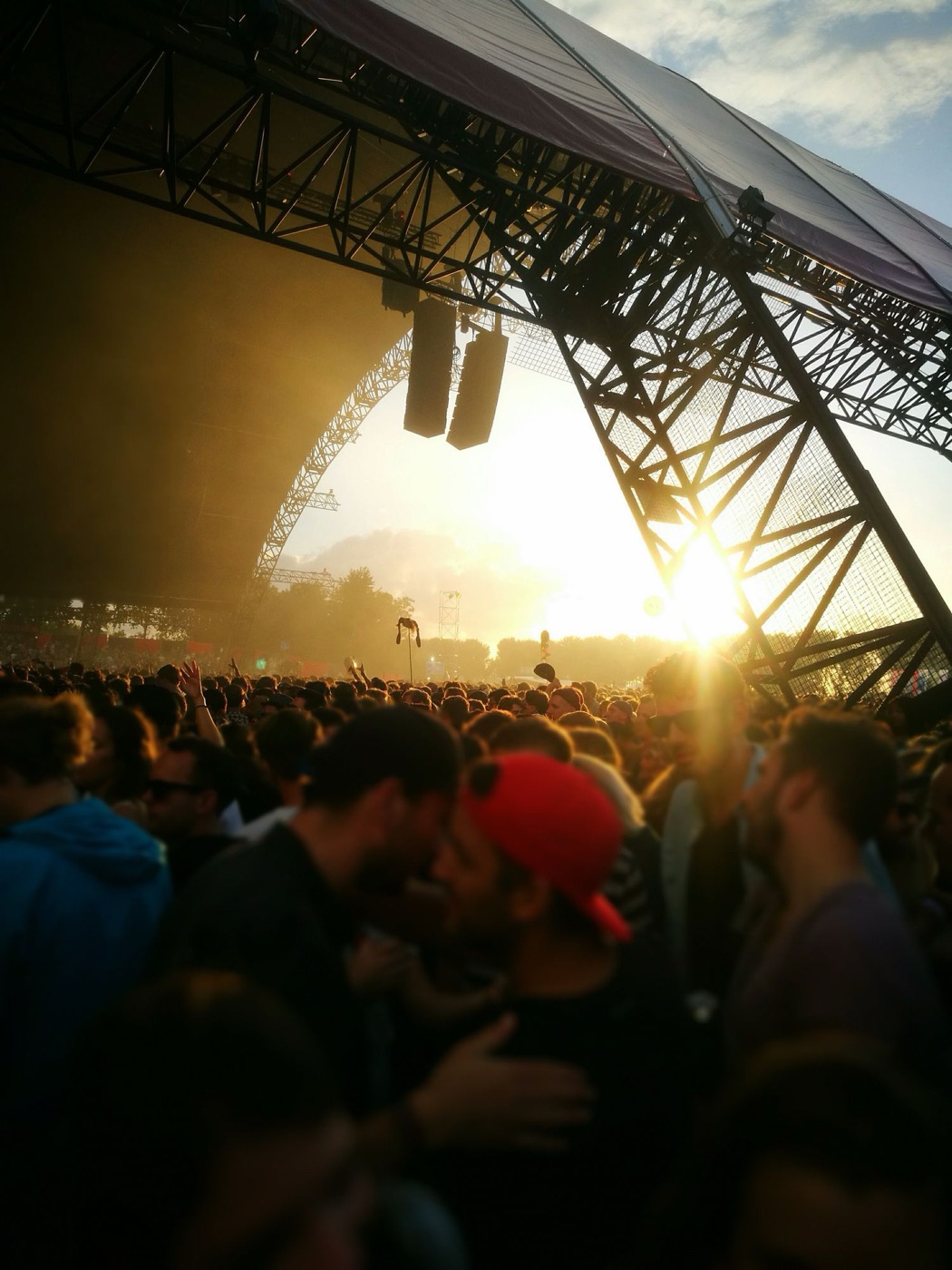
Two things about Shambhala matter more than the lineup. It does not sell alcohol, and possessing it is against the code of conduct, which puts it in a very small category of large music festivals. And since 2003 it has hosted ANKORS, who run one of the longest-standing drug checking operations in North America.
What they actually find in that tent
Across Shambhala and Bass Coast in 2023, more than 70 volunteers analysed 4,544 samples across 2,695 service visits for a combined 26,900 attendees. About 10% of everything handed in was not what the person thought it was.
Notice who is missing from that chart. Mushrooms are not on it, and it is not an oversight. The report states plainly that alcohol, tobacco, cannabis and magic mushrooms “are not analyzed by drug checking services.” The FTIR spectroscopy used at these tents cannot read them, and it cannot reliably detect anything present at less than 5% of a sample either.
That is worth sitting with. Someone at a festival with a bag of unlabelled mushrooms has no way to verify them the way an MDMA or ketamine user can walk twenty metres and find out. Knowing your source is not marketing language in that context, it is the only tool available.
The peer-reviewed evaluation of Shambhala’s programme, published in the Canadian Journal of Public Health, shows why any of this matters. Across 2,387 samples where researchers had both the person’s expectation and the test result, what people did with bad news scaled directly with how bad the news was.
Roughly 45 times more people binned a substance when they had no idea what it was than when the test confirmed their expectations. Of 1,971 samples screened for fentanyl, 31 came back positive, and 16.13% of those were discarded on the spot. That year 200 guests were trained in naloxone, 100 kits went out, and the paper records no opioid overdose deaths at the festival.
Mushrooms are not really the festival drug
There is a stat floating around a lot of blogs claiming that 66% of electronic music fans use magic mushrooms. It is a misreading of a real paper and it is worth correcting, because the truth is more interesting.
The study surveyed 1,345 electronic music event attendees in Belgium and found 10.63% had used mushrooms in the past year, which is 143 people. The 66.44% figure describes where those 143 chose to take them, and the answer was private homes and house parties. Only 2.80% used at licensed festivals or raves. 2.10% in nightclubs.
Mushrooms turn out to be one of the most domestic substances in the whole survey. People take them on a couch with three friends, not in front of a wall of subwoofers. Anyone who has done both will tell you why, and it is not complicated. A festival is already an enormous amount of input.
For scale in this country, Health Canada’s Canadian Substance Use Survey puts past-year psychedelic use at around 7% of Canadians, with psilocybin the most common. Health Canada itself cautions that some of the apparent rise since 2023 may reflect the survey changing how it asks the question rather than real growth, so we are not going to draw a dramatic trend line through it.
Winnipeg Folk Fest has been doing this for fifty years without any of it
If the argument were that substances make the transformation, Winnipeg would be the counterexample that ends it.
It started in 1974 in Birds Hill Provincial Park as a one-off for Winnipeg’s centennial, free to attend, and drew about 22,000 people over three days. It never stopped. The 50th festival in 2025 set an all-time attendance record at 79,000 and sold out every ticket category. Manitoba marked the anniversary by renaming a stretch of Highway 59 Winnipeg Folk Fest Volunteer Way.
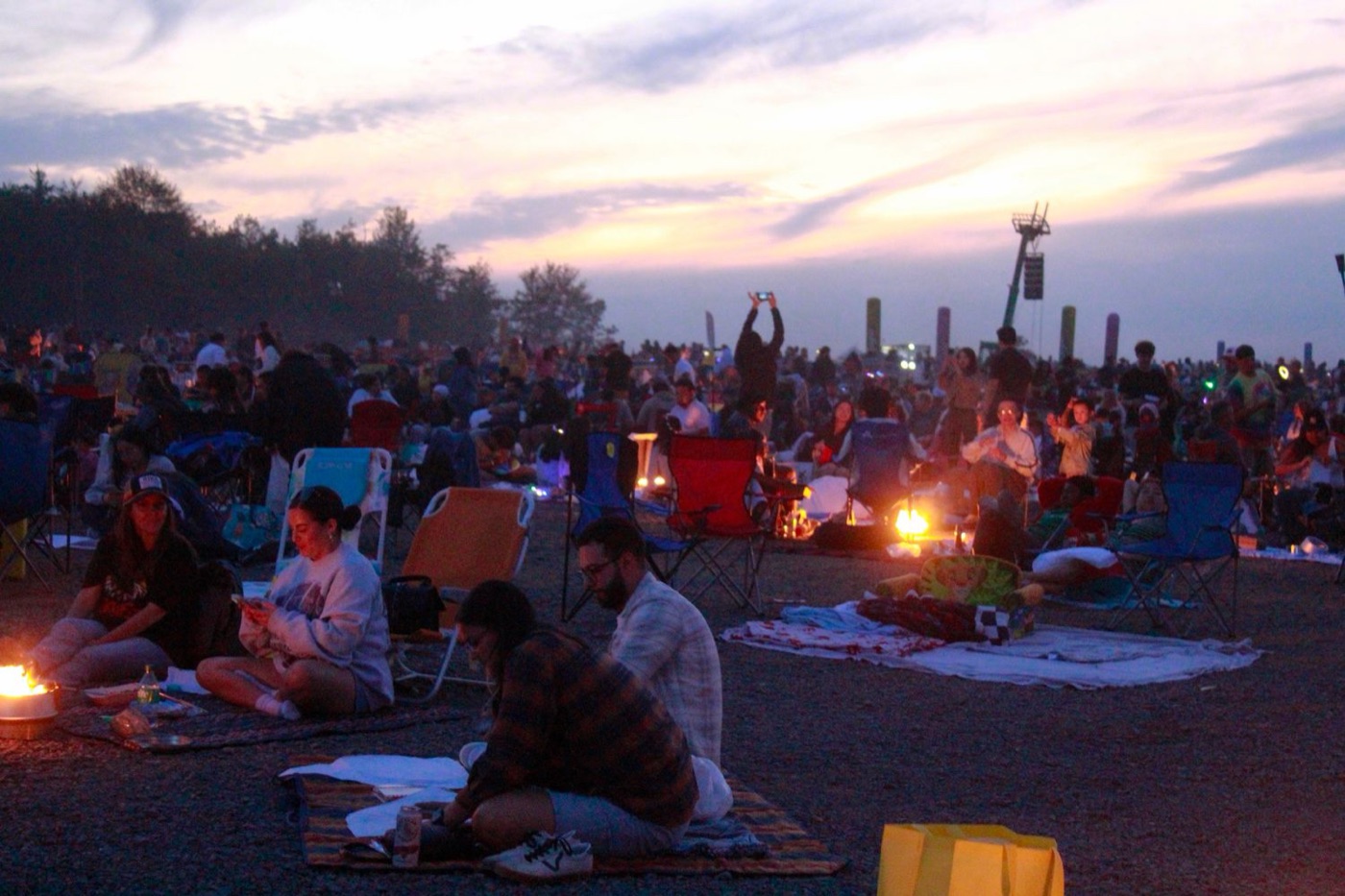
That name is the whole story. Nearly 2,700 volunteers give more than 60,000 hours every year to a nine-stage festival on Treaty 1 territory and the homeland of the Red River Métis. There is a Hand-Made Village that has run since the first festival in 1974. There is a campground culture of homemade attractions, sing-alongs, morning yoga on Pope’s Hill, a trading post, a shadow puppet show.
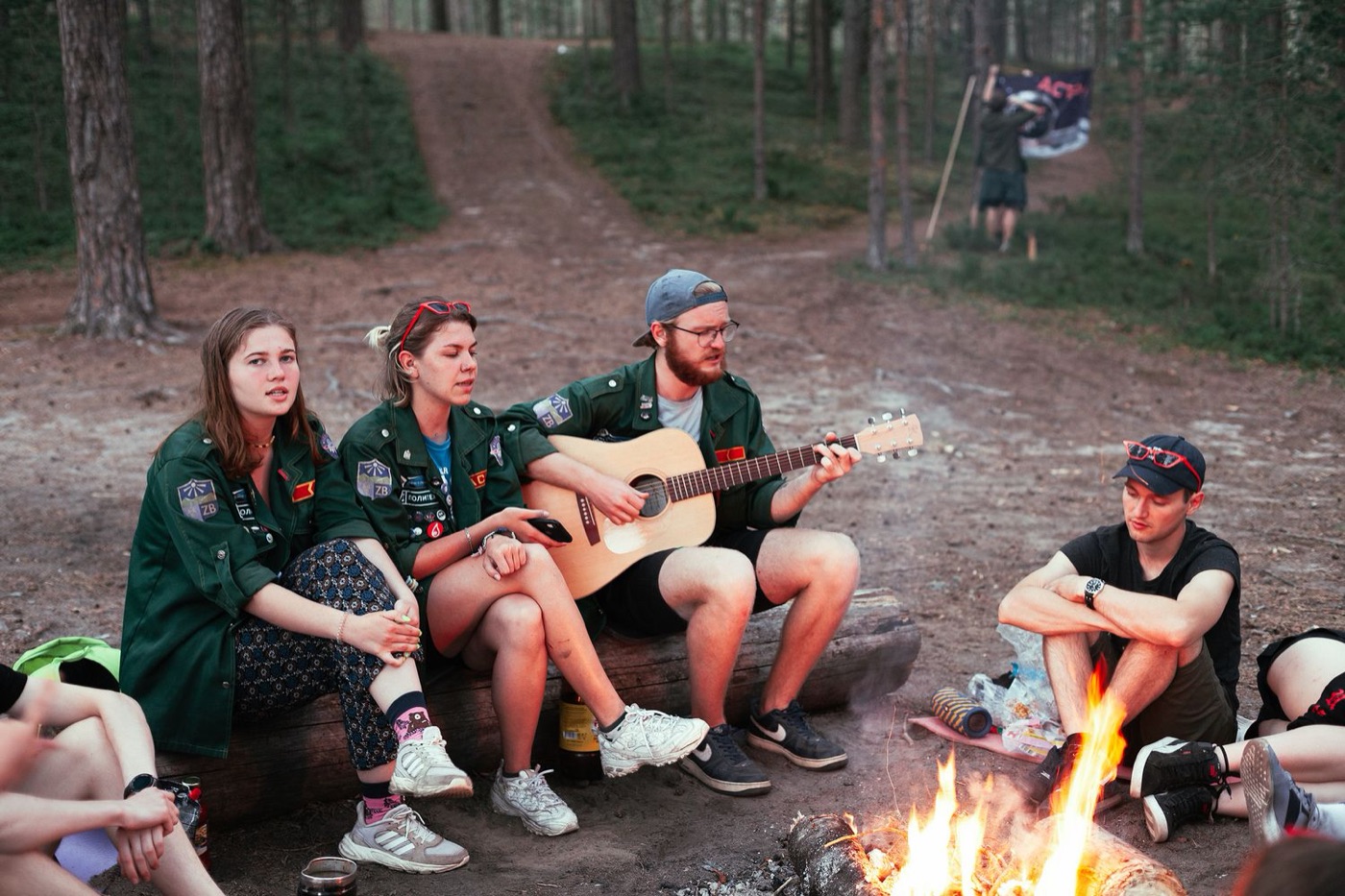
Nobody is checking substances at a Winnipeg campground jam at one in the morning. People are singing, which is the thing Dunbar’s research says actually moves the needle. The synchrony, the repetition, the group larger than 200, the trees. It is the same machinery, running on acoustic guitars.
Why music and psilocybin keep ending up in the same room
Every serious psilocybin trial of the last twenty years has had a soundtrack. That is not a detail, it is protocol. The 2006 Johns Hopkins study that restarted the field describes participants lying on a couch, using an eye mask, and wearing headphones through which “the same music program was played for all participants in all sessions.” Bill Richards built that playlist. It runs seven hours and forty minutes.
Mendel Kaelen’s work at Imperial College is where it gets genuinely surprising. In a study of 19 people with treatment-resistant depression, the quality of someone’s experience of the music predicted how much their depression improved a week later. The raw intensity of the drug did not. Kaelen’s phrase for it is that music acts as a hidden therapist.
Music was already doing something drug-like before anyone added a compound. The classic 2001 PET imaging study by Blood and Zatorre showed that music-evoked chills light up the ventral striatum, midbrain and orbitofrontal cortex, the same reward circuitry that responds to food and sex. Psilocybin appears to loosen the brain’s usual top-down filtering, which researchers describe through the entropic brain hypothesis, and that is a plausible reason a familiar song can feel structurally different.
An honest caveat, because it matters. Every study in this section used a full clinical dose in a supervised room with an eye mask on. Kaelen’s participants took 10mg and 25mg. None of it tells you what a microdose does at a festival, and we are not going to pretend otherwise.
The part most brands in our position leave out
We sell microdoses, so you should weight what follows accordingly. We would rather you heard it here.
The largest placebo-controlled microdosing study ever run, Szigeti’s self-blinding trial in eLife, followed 191 people through four weeks. Both the microdose group and the placebo group improved. Neither beat the other on any accumulative measure at week five or week nine. The authors concluded the improvements were explained by the placebo effect. A separate randomised trial by Cavanna found acute effects showed up mainly in participants who had correctly guessed they were on the active dose.
There is even a study aimed squarely at the awe question in this article. Van Elk and colleagues found more awe on a microdose than on placebo, and then the effect vanished completely once they controlled for what people expected to feel. Roughly two thirds had guessed their condition correctly.
The fairest read comes from Polito and Liknaitzky, who reviewed 19 placebo-controlled studies and concluded it is not yet possible to say whether microdosing is a placebo, while also arguing that confident dismissal is premature given small samples and possibly insufficient doses. That is genuinely where the science sits. Our full research library leads with these trials rather than hiding them.
On risk, larger doses can go badly even in ideal conditions. In that same 2006 Hopkins study, 11 of 36 volunteers rated their fear as strong or extreme, and eight described anxiety dominating a significant part of the session. Two compared it to being in a war. A 2016 survey of people asked specifically about their most difficult psilocybin experience found 39% ranked it among the five most challenging experiences of their life and 11% said they put themselves or someone else at physical risk. Anyone with a personal or family history of psychosis should not be doing this at all, and repeated dosing carries a theoretical cardiac question through the 5-HT2B receptor that has not been properly studied yet.
If you are going to a festival anyway
The research points somewhere fairly practical, and most of it costs nothing.
Sing along and dance badly, because performing is what shifted the endorphin proxy in the research and passive listening did not. Go and stand somewhere vast. Find the forest stage, or the field at 6am. Use the drug checking tent if there is one, since the data says people genuinely act on what they learn there. And go with people you would still like at hour fourteen, because the six-month generosity effect showed up in the relationships people carried home, not in the set they watched.
On dosing, the honest answer is that a festival is already maximum sensory input. If you are experimenting, the smallest thing you can take is the sensible starting point, which is why our Mini Capsules at 30mg exist, and why Clarity at 125mg is the one people actually bring rather than anything larger. Save the macrodose conversation for a quiet room with a good playlist and someone you trust, which is what the research protocols have been doing all along. If you have no idea where you sit, the two-minute quiz is a better starting point than guessing.
Whatever gets you there, the field does most of the work. Twenty thousand people, a stage in the trees, and a drive home where nobody says anything for twenty minutes.
Six months later, the data says you will still be talking about it.
Frequently Asked Questions
Do music festivals actually change people long term?
The best evidence says yes, at least for some people. A 2022 Nature Communications study across six field sites found 72.7% still reported a transformative experience six months later, and participants gave away 62% of a real cash raffle to strangers versus about 28% in laboratory versions of the same game.
Can you get mushrooms tested at a festival drug checking tent?
No. The BC Interior Festival Drug Checking report states that alcohol, tobacco, cannabis and magic mushrooms are not analyzed by these services. The FTIR spectroscopy used cannot read them, which is why knowing your source matters more with mushrooms than with almost anything else.
Does Shambhala allow alcohol?
No. Shambhala does not sell alcohol and its code of conduct prohibits possessing it, with violations resulting in a warning or immediate ejection. It is one of very few large music festivals in North America to take that position.
Why is music always played during psilocybin research?
Because it appears to shape the outcome. In a study of 19 people with treatment-resistant depression, the quality of the music experience predicted how much depression improved a week later, while the raw intensity of the drug did not. Johns Hopkins uses a curated playlist running seven hours and forty minutes.
Does microdosing work, or is it placebo?
Honestly, it is unresolved. The largest placebo-controlled trial, Szigeti 2021 in eLife, found no difference between microdose and placebo groups. A 2024 review of 19 controlled studies concluded it is not yet possible to say whether microdosing is a placebo, while cautioning that confident dismissal is also premature.
Sources
- Yudkin DA, Prosser AMB, Heller SM, McRae K, Chakroff A, Crockett MJ. Prosocial correlates of transformative experiences at secular multi-day mass gatherings. Nature Communications, 2022.
- Tarr B, Launay J, Cohen E, Dunbar RIM. Synchrony and exertion during dance independently raise pain threshold and encourage social bonding. Biology Letters, 2015.
- Dunbar RIM, Kaskatis K, MacDonald I, Barra V. Performance of music elevates pain threshold and positive affect. Evolutionary Psychology, 2012.
- Weinstein D, Launay J, Pearce E, Dunbar RIM, Stewart L. Group music performance causes elevated pain thresholds and social bonding in small and large groups of singers. Evolution and Human Behavior, 2016.
- Piff PK, Dietze P, Feinberg M, Stancato DM, Keltner D. Awe, the small self, and prosocial behavior. Journal of Personality and Social Psychology, 2015.
- ANKORS, BCCSU and Interior Health. BC Interior Festival Drug Checking, 2023 season.
- Mema SC, Sage C, Xu Y, Tupper KW, et al. Drug checking at an electronic dance music festival during the public health overdose emergency in British Columbia. Canadian Journal of Public Health, 2018.
- Van Dyck E, et al. Substance use patterns among electronic dance music attendees. IJERPH, 2023.
- Health Canada. Canadian Substance Use Survey.
- Kaelen M, Giribaldi B, Raine J, et al. The hidden therapist, evidence for a central role of music in psychedelic therapy. Psychopharmacology, 2018.
- Griffiths RR, Richards WA, McCann U, Jesse R. Psilocybin can occasion mystical-type experiences having substantial and sustained personal meaning and spiritual significance. Psychopharmacology, 2006.
- Blood AJ, Zatorre RJ. Intensely pleasurable responses to music correlate with activity in brain regions implicated in reward and emotion. PNAS, 2001.
- Szigeti B, Kartner L, Blemings A, et al. Self-blinding citizen science to explore psychedelic microdosing. eLife, 2021.
- Polito V, Liknaitzky P. Is microdosing a placebo? A rapid review of low-dose psychedelic research. Journal of Psychopharmacology, 2024.
- Carbonaro TM, Bradstreet MP, Barrett FS, et al. Survey study of challenging experiences after ingesting psilocybin mushrooms. Journal of Psychopharmacology, 2016.
- Black Rock City Census. 2025 Population Report.
- Shambhala Music Festival. About and Health, Safety and Harm Reduction.
- Winnipeg Folk Festival. About Us.
- CBC News. Winnipeg Folk Fest sets new attendance record for 50th anniversary.